
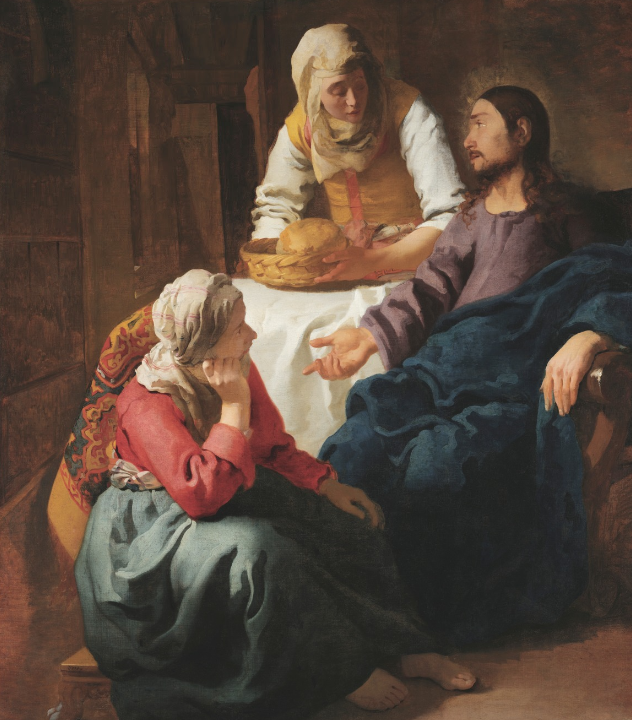
Christ in the House of Mary and Martha
by Johannes Vermeer (c. 1655)
As mothers, we live in a world of noise, motion, and need. Laundry piles up, meals must be made, children cry or call or argue. We often feel like Martha, “worried and anxious about many things” (Luke 10:41). In this painting by Johannes Vermeer, Christ’s words to Martha come to life in a moment of quiet.
In this Sunday’s Mass readings, we read about a family scene featuring two sisters in their family home. This painting, depicting the Gospel account, shows Mary sitting close to the Lord, her face turned toward Him in stillness. Jesus gestures gently as He teaches. Martha stands nearby, holding a tray. She looks on with concern, caught between the demands of hospitality and the desire to listen. It is a scene that could unfold in any of our homes.
Vermeer doesn’t paint Martha as frantic or rude. She is dignified, strong, and thoughtful—like so many Catholic mothers. But still, Jesus speaks tenderly to her: “Martha, Martha…” He knows her heart. He honors her service. But He gently invites her to see that one thing is needful: to be with Him.
This Gospel—and this painting—are not a rebuke of motherhood. They are a call to root our motherhood in contemplation. To choose, even for a moment, the “better part.” That means turning our hearts toward Christ even as we stir the soup or change a diaper. It means pausing for morning prayer, or whispering a Hail Mary while folding socks. It means seeing the work as service because it flows from love.
Look again at Mary in the painting. She sits still, but she is not idle. She is listening with her whole heart. That is what Christ asks of us. And when we give Him our attention, even amid the work, He is pleased.
This week, as we prepare for the school year and manage the endless tasks of summer, may we remember this quiet scene. May we not despise our Martha-work, but may we seek to do it like Mary, at the feet of Jesus.
“Mary has chosen the better part, and it will not be taken from her.”
—Luke 10:42