
Blog
Why Does the CLAA Use General Questions for Assessment?
In Academy courses, I often assess student work with written assessments in which I ask general questions concerning each lesson in a course. For example, in the Academy’s Classical Reasoning course, I ask students to answer the same following questions for every lesson: Please state the name of the author, title, book and chapter studied in this reading. Summarize your recent/previous readings in the subject/course to prepare the context for this chapter. What is the principal subject of the present reading? (This is often stated by the author.) As you read and review the chapter, make a list/outline of the … Continue


Critique of “What is a Classical Education?” by Martin Cothran of Memoria Press
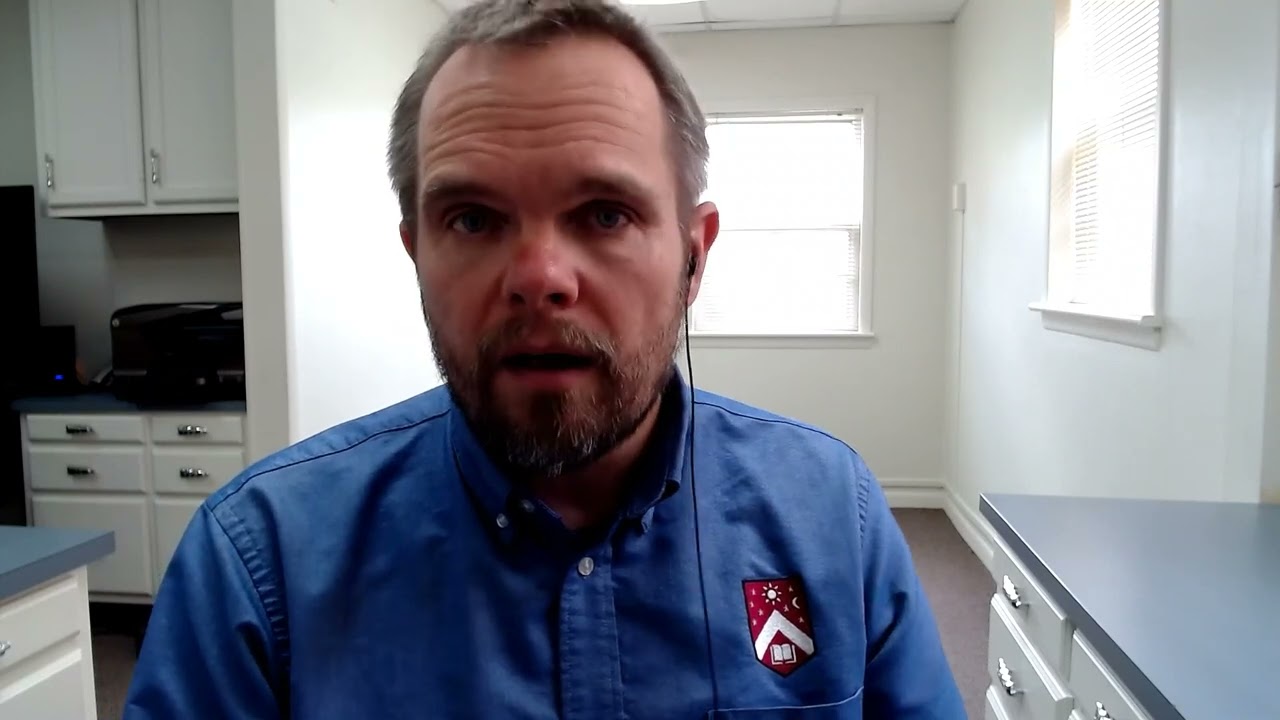
In this video, I offer parents some help in understanding what’s wrong with the message and practice of the falsely called “classical education” movement, which the Classical Liberal Arts Academy is NOT a part of. I hope you find this helpful. Mr. William C. MichaelClassical Liberal Arts Academy
Intro. to Classical Arithmetic, Lesson 03. Of Comparison
To complete the objectives of this lesson, complete the following tasks: Study the lesson for mastery. Complete the lesson memory work. Pass the lesson exam. Lesson It is very important that we know how to rightly compare quantities. EQUALITY AND INEQUALITY Let’s begin by clarifying a number of important definitions. When we use the term “Equality”, we mean that two or more things agree in their quantities. If these things did not agree in their quantities, we would call this “Inequality”. If we compare two multitudes, say five apples and seven apples, we will see that the quantities are not … Continue
Reading Vergil’s Aeneid
In Latin Reading III, students in the Classical Liberal Arts Academy study Latin poetry. In particular, we study Vergil’s Aeneid. This work was written in a meter called dactyllic hexameter, the same meter in which Homer’s Iliad and Odyssey were written in Greek. Reading classical poetry is difficult because we must be careful to read so that the natural accents of the words are maintained, while the length of the syllables that make up the rhythm of the poem are spoken correctly. The best way to do this is to imagine the meter of the poem written in modern musical … Continue