
St. John Henry Newman on the Strategy of 19th Century Scientists
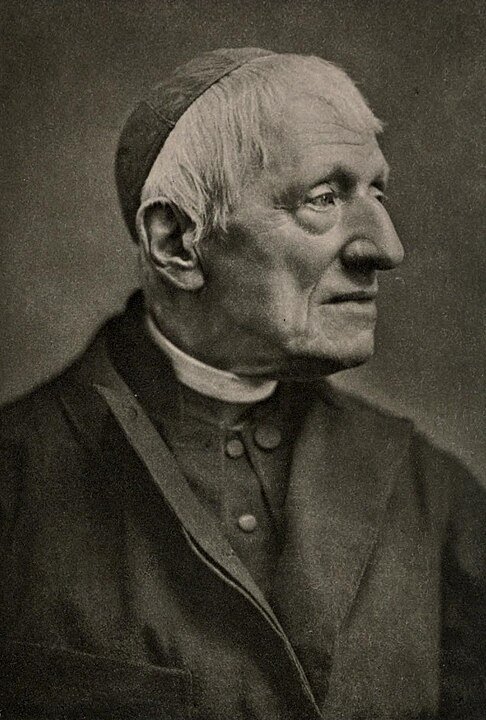
Catholic schools are closing or consolidating. Colleges and universities are moving to shut down their classics departments and move away from liberal studies. Curricula in Catholic schools and colleges are substantially the same as that of public schools and secular colleges; that is, Math and Science are the foundation of nearly all Catholic educational endeavors today. This despite the fact that the liberal arts, philosophy, and theology were the foundation for a thousand years. What is the purpose of all these changes we see in education? Are they deliberate?
Have the arguments of modern Science simply debunked the methods and conclusions of Catholic philosophers and theologians? Has Science found its way to the truth, winning the debate so to speak, that the philosophers and theologians had won for centuries? Sometimes we Catholics act as if this were the case. No one believes that Catholic stuff anymore. We can still be Catholic, sure, but education must be directed by those who know the truth about the world. Where we formerly deferred to the monk and the cleric, today we must defer to the scientist and the mathematician.
In reality, the reason why Catholic institutions are failing is not because modern Science has provided a superior or demonstrative argument. Rather, as St. John Henry Newman argues, it is because modern Science is more useful and much more attractive than the liberal arts and classical Catholic education. Think about that. Modern Science is useful and full of novelties. Classical Catholic education is not practical and is based on principles which will never change.
The following quote from Newman is lengthy, but, it is necessary to grasp his argument. The reason why Catholic schools are empty is because this was strategic, and it has been a grand success. The scientists did not defeat the arguments and logic of the scholastics who controlled the educational enterprise since 800AD. They ignored them and offered their own, new curriculum, hoping to attract students before they had a chance to hear these ancient ideas which they opposed. They believed that if they could fill the imaginative part of students’ intellects with the dazzle and show of modern science, with all their fields of study, countless artifacts and particular natural wonders, then by the time students got around to hearing the elements of Euclid or the truths of divine revelation, such things would seem repugnant to them. They would simply be left unstudied. These scientists were right.
Let us listen to Newman:
And in like manner it is clear that the tendency of science is to make men indifferentists or sceptics, merely by being exclusively pursued. The party, then, of whom I speak, understanding this well, would suffer disputations in the theological schools every day in the year, provided they can manage to keep the students of science at a distance from them.
Nor is this all; they trust to the influence of the modern sciences on what may be called the Imagination. When any thing, which comes before us, is very unlike what we commonly experience, we consider it on that account untrue; not because it really shocks our reason as improbable, but because it startles our imagination as strange.
…While, then, Reason and Revelation are consistent in fact, they often are inconsistent in appearance; and this seeming discordance acts most keenly and alarmingly on the Imagination, and may suddenly expose a man to the temptation, and even hurry him on to the commission, of definite acts of unbelief, in which reason itself really does not come into exercise at all. I mean, let a person devote himself to the studies of the day; let him be taught by the astronomer that our sun is but one of a million central luminaries, and our earth but one of ten million globes moving in space; let him learn from the geologist that on that globe of ours enormous revolutions have been in progress through innumerable ages; let him be told by the comparative anatomist, of the minutely arranged system of organized nature; by the chemist and physicist, of the peremptory yet intricate laws to which nature, organized and inorganic, is subjected; by the ethnologist, of the originals, and ramifications, and varieties, and fortunes of nations; by the antiquarian, of old cities disinterred, and primitive countries laid bare, with the specific forms of human society once existing; by the linguist, of the slow formation and development of languages; by the psychologist, the physiologist, and the economist, of the subtle, complicated structure of the breathing, energetic, restless world of men; I say, let him take in and master the vastness of the view thus afforded him of Nature, its infinite complexity, its awful comprehensiveness, and its diversified yet harmonious colouring; and then, when he has for years drank in and fed upon this vision, let him turn round to peruse the inspired records, or listen to the authoritative teaching of Revelation, the book of Genesis, or the warnings and prophecies of the Gospels, or the Symbolum Quicumque or the Life of St. Antony or St. Hilarion, and he may certainly experience a most distressing revulsion of feeling,—not that his reason really deduces any thing from his much loved studies contrary to the faith, but that his imagination is bewildered, and swims with the sense of the ineffable distance of that faith from the view of things which is familiar to him, with its strangeness, and then again its rude simplicity, as he considers it, and its apparent poverty contrasted with the exuberant life and reality of his own world. All this, the school I am speaking of understands well; it comprehends that, if it can but exclude the professors of Religion from the lecture-halls of science, it may safely allow them full play in their own; for it will be able to rear up infidels, without speaking a word, merely by the terrible influence of that faculty against which both Bacon and Butler so solemnly warn us.
I say, it leaves the theologian the full and free possession of his own schools, for it thinks he will have no chance of arresting the opposite teaching or of rivalling the fascination of modern science. Knowing little, and caring less for the depth and largeness of that heavenly Wisdom, on which the Apostle delights to expatiate, or the variety of those sciences, dogmatic or ethical, mystical or hagiological, historical or exegetical, which Revelation has created, these philosophers know perfectly well that, in matter of fact, to beings, constituted as we are, sciences which concern this world and this state of existence are worth far more, are more arresting and attractive, than those which relate to a system of things which they do not see and cannot master by their natural powers. Sciences which deal with tangible facts, practical results, evergrowing discoveries, and perpetual novelties, which feed curiosity, sustain attention, and stimulate expectation, require, they consider, but a fair stage and no favour to distance that Ancient Truth, which never changes and but cautiously advances, in the race for popularity and power. And therefore they look out for the day when they shall have put down Religion, not by shutting its schools, but by emptying them.1
That day is here. Newman was writing in the late 1800s. These men did in fact move forward with this clever plan, and they have succeeded. The reason why classical Catholic schools no longer exist is not because of any heavy handed government policies (the Church still operates tax exempt), nor by any forcible closures (we do that voluntarily), nor even by having refuted the arguments of our wisest men. What they have done is simply captured the imagination of the young mind and delayed the exposure to the liberal arts and Catholic philosophy. By the time they may happen to come across such studies, they do indeed seem repugnant, even laughably so, not by any reasonable case, but simply that it appears so antiquated. Catholic schools have unfortunately followed their lead in the ordering of the curriculum. It should be no surprise then, that Catholic schools are empty and Catholic minds by the time they are mature have become skeptical and indifferent. This is exactly what Newman predicted.
It is no matter that the modern subjects, as we have said, are useful and attractive. Neither Newman nor any reasonable Catholic denies this. Yet such uses and such temporal beauty are fleeting and are not enduring. These are not the things upon which one builds real culture, meaningful and enduring institutions, fulfilling lifetimes, and lasting legacies. The objects and the ideas of modern educators are like the lower ends in Aristotle’s hierarchy of arts. They celebrate goals which are meant to be achieved for the sake of something else, but which are instead celebrated in themselves. They multiply disciplines and fascinate students with the wonders and spectacles of every science, but not one of them knows the end of all these works or how any of them relate to the other. They forget to ask the question that Aristotle asked: what good does this gain for us? Do any of these sciences lead to human happiness?
It should be obvious to Catholics what needs to change. It was obvious to Newman, though he does not appear to have realized how quickly Catholic schools would be emptied by the lure of the modern age. In the meantime, the studies left to the side wait, as he said elsewhere to be brought back to their rightful place: the seven classical liberal arts, philosophy, and theology.2 The end of such studies is in fact sought for its own sake and not for the sake of anything else. By this end men attain wisdom. It is the good all men are really seeking: happiness in God.
- Newman, Idea of a University, Part II, Lecture 5 A Form of Infidelity of the Day. ↩︎
- Ibid. Lecture 1 Christianity and Letters: “…though there were times when the old traditions seemed to be on the point of failing, somehow it has happened that they have never failed; for the instinct of Civilization and the common sense of Society prevailed, and the danger passed away, and the studies which seemed to be going out gained their ancient place, and were acknowledged, as before, to be the best instruments of mental cultivation, and the best guarantees for intellectual progress.” ↩︎