
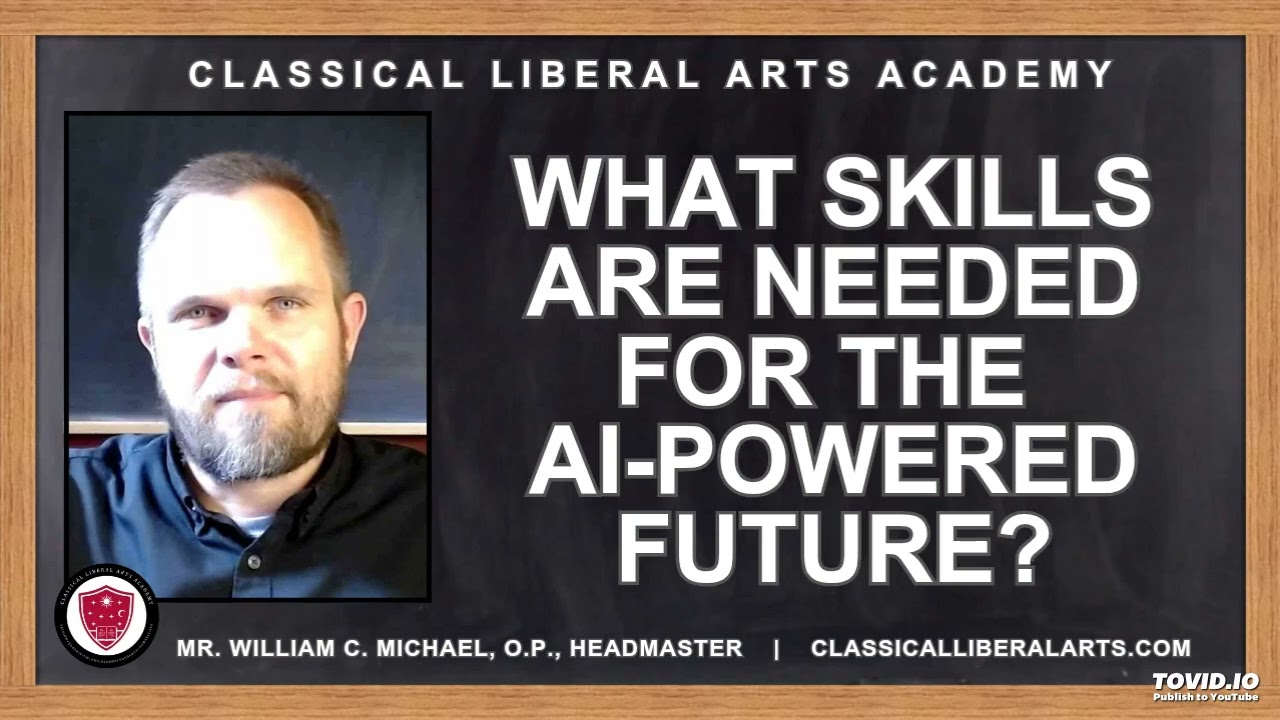
As artificial intelligence continues to automate routine labor, reshape industries, and challenge traditional employment structures, educators and parents alike must ask a crucial question: What human capabilities will remain indispensable in the age of AI?
The answer, according to recent research from MIT Sloan((https://mitsloan.mit.edu/ideas-made-to-matter/these-human-capabilities-complement-ais-shortcomings?fbclid=IwY2xjawLB0shleHRuA2FlbQIxMQABHobFI2XjhGXi5erRUiqofaaV310-KcGanj5DnoKKh637mmCIf_BMB_ZyuRGI_aem_kVdvB07__SkhxVQbys0eQA)), lies in five uniquely human traits that machines cannot replicate—Empathy, Presence, Opinion, Creativity, and Hope. These EPOCH capabilities form the foundation of meaningful work in an AI-powered future, requiring judgment, virtue, and imagination that no algorithm can simulate.
Yet as our world becomes increasingly technological, the question deepens: How can we effectively cultivate these capabilities in our children? Modern education, with its utilitarian focus and fragmented disciplines, often fails to nourish the soul and intellect in ways that foster truly human excellence. By contrast, the Classical Liberal Arts Academy (CLAA), grounded in Catholic tradition and guided by the timeless wisdom of the Church, offers an education purpose-built for this challenge. Each EPOCH capability is not only affirmed but formed by the classical Catholic curriculum.
In this article, we will explore each of the EPOCH capabilities in turn and show how the Classical Liberal Arts Academy cultivates them through the liberal arts, moral philosophy, and spiritual formation that define its pedagogy.
Empathy: The Fruit of Moral Philosophy and Christian Charity
Empathy—the capacity to enter into another’s interior experience—is perhaps the most essential of the EPOCH capabilities. While AI can process sentiment, mimic responses, and simulate concern, it cannot understand suffering or extend compassion. Empathy demands a moral imagination and a heart formed by love.
In the Classical Liberal Arts Academy, empathy is cultivated not as a sentimental feeling but as a virtue rooted in Christian charity. Students study the Catechism of the Catholic Church, where the commandments to love God and neighbor form the basis of moral life. They learn from St. Thomas Aquinas that charity is the highest theological virtue, binding the soul to God and extending outward in mercy toward others.
Through the study of classical literature—from Homer to Virgil to the saints—students encounter the depth of human suffering, joy, and moral conflict. They do not merely read about emotions; they learn to see with another’s eyes and feel with another’s heart. This is empathy born of understanding, not emotional indulgence.
Moreover, the study of Aristotelian logic, rhetoric, and moral philosophy contributes deeply to the formation of empathy. Logic trains students to understand the reasoning of others fairly and clearly, enabling them to approach disagreements not with suspicion but with intellectual charity. Rhetoric teaches students to enter into the mind of their audience, to communicate persuasively with sympathy and moral concern. And moral philosophy, especially Aristotle’s Nicomachean Ethics, shapes the heart to seek the good of others, forming in students the habits of justice, friendship, and magnanimity. These disciplines do not isolate the intellect from the affections—they harmonize them, creating a soul capable of compassionate understanding and virtuous action.
In a world increasingly dominated by machine interaction, it is precisely this human depth—this capacity to care, to listen, to weep, to rejoice—that will become most rare and most valuable. The Classical Liberal Arts Academy trains the soul not to react like a machine, but to love like Christ.
Presence: The Art of Attention and the Habit of Stability
In an age of digital distractions and remote interactions, true presence—the ability to be fully engaged with others in body, mind, and spirit—is both rare and deeply needed. AI can be present in every room via screens and devices, but it can never be truly “with” someone in the human sense. Presence requires interior integration: attention, silence, receptivity, and a reverence for the moment.
The Classical Liberal Arts Academy instills these habits of presence through its emphasis on contemplation and liturgical time. Students learn to order their day not around notifications or performance metrics, but around prayer, study, and reflection. The sacred liturgy, observed and studied as part of the curriculum, shapes students to enter into something eternal and unchanging. The liturgy forms presence.
Moreover, the Academy’s courses train attention itself. Classical grammar, for example, teaches a child to focus on details in language—to parse the structure of a Latin sentence, to read with attentiveness and care. In logic, students learn to follow the thread of an argument, holding premises in mind and assessing conclusions without distraction. In Aristotle’s Topics, students engage with the art of dialectical reasoning, which requires listening, patience, and respectful presence in discussion.
And above all, the Catholic parish forms students in the virtue of presence by immersing them in a sacramental community. While screens isolate and distract, the parish calls families to gather, in body and soul, around the altar of God. The sacraments—especially the Holy Eucharist—require presence. One cannot receive grace from afar. Baptism is poured, Confession is heard, and Communion is tasted. This repeated demand for physical participation forms habits of presence far deeper than anything a classroom alone can achieve.
In the parish, children see presence modeled by pastors who sit with the sick, accompany the suffering, and celebrate with the joyful. They grow up attending feast days, funerals, processions, and parish missions—all of which anchor them to a real community in real time. In this way, the parish becomes not just a religious obligation, but a school of presence: of showing up, of listening, of loving.
In a world addicted to speed and spectacle, the student who has learned how to be still—how to enter fully into the moment, to give another person the gift of undivided attention—will possess a superpower no machine can imitate. Presence is the fruit of discipline, silence, and sacred study—and all of these are at the heart of the classical Catholic tradition.
Opinion: Forming Judgment, Prudence, and Right Reason
Among the most irreplaceable human qualities is the capacity for opinion—not mere preference, but reasoned judgment grounded in truth and moral insight. Machines may process information and suggest likely outcomes, but they cannot exercise prudence. They cannot determine what ought to be done in light of the good.
The Classical Liberal Arts Academy exists to form precisely this power of right reason. From the Trivium—grammar, logic, and rhetoric—students develop the tools for understanding, evaluating, and expressing complex ideas. Grammar teaches clarity of thought. Logic trains the mind to discern valid from invalid reasoning. Rhetoric forms the power of persuasive speech grounded in truth.
Beyond this, the Academy’s focus on Aristotelian ethics and Catholic moral theology forms the conscience. Students learn that opinion is not arbitrary; it must be informed by truth, tested by reason, and ordered to the good. They read Aquinas on the virtues, learning how prudence governs all practical decision-making. They examine case studies from history and Scripture, practicing the application of principle to circumstance.
In the AI-powered future, the greatest threat is not misinformation, but the abdication of judgment. Those who retain the ability to say, “This is good,” or “This is wrong,” will be leaders. The Classical Liberal Arts Academy does not outsource moral reasoning; it equips students to become men and women of judgment—capable of opinion rooted in wisdom and courage.
Creativity: Nurturing the Divine Spark of Imagination
Creativity—the capacity to conceive what does not yet exist—is the heartbeat of innovation, culture, and renewal. While AI can remix existing content, optimize variables, and simulate novelty, it cannot dream, desire, or create from nothing. True creativity flows from the spiritual soul.
In the Classical Liberal Arts Academy, creativity is cultivated not through gimmicks or entertainment, but through a deep immersion in beauty and order. Students study classical poetry, not to memorize formulas but to see the world as the poets saw it. They explore sacred music, architecture, and the visual arts as expressions of divine harmony. They read the Book of Genesis, where creation begins not in chaos, but in wisdom.
More importantly, creativity is nourished by freedom—the interior liberty that comes from moral discipline and spiritual formation. In the Academy, students are not stifled by industrial schooling or standardized testing. They are free to think, to write, to contemplate, to imitate the best and grow into something original.
Philosophically, the Academy teaches that man is made in the image of God, the Creator. This truth affirms that creativity is not a luxury, but a vocation. Whether in the service of truth, beauty, or practical invention, human beings are called to co-create with God. And this sacred vocation is realized not through machines, but through men and women formed in wonder.
AI will never write a Divine Comedy or compose a Mass. It will never invent a worldview, never pray, never sing from the heart. The Classical Liberal Arts Academy forms students who do.
Hope: Forming the Will in a World of Despair
Of all the EPOCH capabilities, hope is the most transcendent—and the most endangered. Machines do not hope. They do not persevere through uncertainty. They do not pray. Hope is not optimism. It is a theological virtue, infused by God, and it empowers the soul to seek eternal life and to trust in divine providence.
The Classical Liberal Arts Academy is singular in its commitment to forming hope. The curriculum is grounded in the Catholic faith, which teaches that man is made not for comfort but for glory. Students are taught the four last things—death, judgment, heaven, and hell—not to frighten but to orient their lives toward eternity.
In an AI age, when so much is uncertain, and the pace of change tempts despair, the child who has been formed in the virtue of hope will remain steadfast. He will not place his trust in systems or outcomes. He will labor diligently but rest in God. This is not naiveté; it is moral courage.
Hope is taught through the lives of the saints, who endured every form of suffering and loss and yet continued in faith. It is taught through the prayers of the Psalms, which cry out from the depths yet never give up. It is taught in the writings of Augustine and Aquinas, where the soul is seen as a pilgrim, always striving toward the beatific vision.
In this way, the Classical Liberal Arts Academy forms not just minds but wills. It produces students who are not afraid of the future, because they know who they are, where they are going, and Who holds the world in His hands.
Conclusion: An Education for the EPOCH Future
As AI grows in power, the question we must ask is not simply, “What can machines do?” but rather, “What must humans become?” The EPOCH capabilities—Empathy, Presence, Opinion, Creativity, and Hope—are not technical skills. They are fruits of formation, of virtue, and of an education that reaches the soul.
The Classical Liberal Arts Academy offers exactly this kind of education. Rooted in the wisdom of the Church, nourished by the classical tradition, and aimed at eternal ends, it prepares students not merely for college or career, but for humanity. It does not fear AI; it transcends it. It does not train workers; it forms saints.
In the years ahead, as the economy shifts and automation expands, the most valuable asset a young person can possess will not be a programming language or a certification. It will be the moral and intellectual formation that allows him to be fully human. It will be the virtues that define the EPOCH model.
The Classical Liberal Arts Academy forms those virtues—not by accident, but by design. And in doing so, it prepares a generation not just to survive the future, but to lead it.