
Somewhere in the deep recesses of the wilderness of Kadesh on the Sinai Peninsula, far away from the Egyptian masters from whom he had led the people from slavery, the humble Moses sat among the crags. The irony may have made him smile because those slavedrivers from whom he escaped had also been his teachers. When he was young, they taught him the classical arts, mathematics, and how to meditate. After all that he himself had witnessed – the great wonders that the God, “I Am Who Am” had inflicted upon his adversary Pharaoh – he now had some quiet time again, in between the murmurings of his Hebrew brethren, to mediate. Who was this God named “Being Itself”? And who is man? These are the beginnings of metaphysical philosophy, and Moses had the advantage of meeting this God face to face, as it were, and knowing his name, I AM.
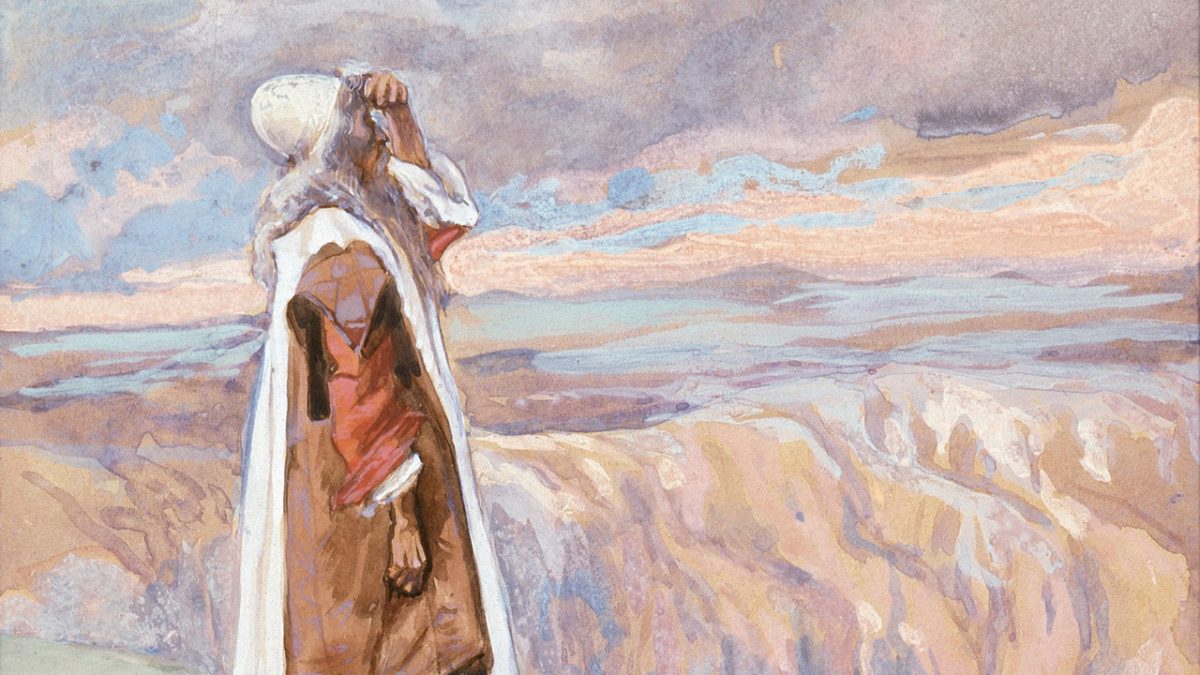
What Moses contemplated in the wilderness during these the dawning years of man’s pilgrimage towards God overflowed into writing, as Moses was wont to do. Wise men ungrudgingly share wisdom,1 and so it was with him. Some scrivener did the longhand I’m sure, but they were Moses’ words and they emerged from the depth of a soul whose amazing life ought to be remembered and retold. Let us read Moses’ timeless mediation which has made its way down to our age:
LORD, thou hast been our refuge, from one generation to another.
Before the mountains were brought forth, or ever the earth and the world were made, thou art God from everlasting, and world without end.
Thou turnest man to destruction; again thou sayest, Come again, ye children of men.
For a thousand years in thy sight are but as yesterday when it is past, and as a watch in the night.
As soon as thou scatterest them they are even as a sleep; and fade away suddenly like the grass.
In the morning it is green, and groweth up; but in the evening it is cut down, dried up, and withered.
For we consume away in thy displeasure, and are afraid at thy wrathful indignation.
Thou hast set our misdeeds before thee; and our secret sins in the light of thy countenance.
For when thou art angry all our days are gone: we bring our years to an end, as it were a tale that is told.
The days of our age are threescore years and ten; and though men be so strong that they come to fourscore years, yet is their strength then but labour and sorrow; so soon passeth it away, and we are gone.
But who regardeth the power of thy wrath? or feareth aright thy indignation?
So teach us to number our days, that we may apply our hearts unto wisdom.
Turn thee again, O LORD, at the last, and be gracious unto thy servants.
O satisfy us with thy mercy, and that soon: so shall we rejoice and be glad all the days of our life.
Comfort us again now after the time that thou hast plagued us; and for the years wherein we have suffered adversity.
Show thy servants thy work, and their children thy glory.
And the glorious majesty of the LORD our God be upon us: prosper thou the work of our hands upon us; O prosper thou our handy-work.2
What he writes is Psalm 90. It is my favorite psalm. I often have thought of this as a “Psalm for Fathers” because of the themes of life, death, children, work, secret sin, and mercy. The themes are worth mediating on, as Moses did in the wilderness of Sinai.
Who is God? He is the one who “IS” before the mountains or the earth existed in some world without end. He is one of the things that endure. Who is man? The opposite. We are like the grass that grows in the morning and withers by evening. We are one of the things that are corruptible. God is continually calling us back because we are always tending towards wickedness.
How does God deal with the wickedness of man? We are turned to destruction. Scattered into a sleep in death. A thousand years are like a watch in the night to him. Wicked men, to God, are forgotten, unknown, inconsequential. For we consume away in God’s displeasure. Our hidden misdeeds are known. If we abide in wickedness, how much more depressing is the shortness of life? As we get older we realize that soon all our days will be gone and we will have brought our years to an end – how much more dreadful is this feeling of approaching death when one has given himself over to wickedness?
This is why Moses begs the Lord: “teach us to number our days, that we may apply our hearts unto wisdom.” This is what we must do, then, as good men. Number our days, and then apply our hearts unto wisdom. Study. Pray. Work. Our days are coming to an end.
The following music was written by Thomas Tallis. I arranged the music and adapted Moses’ Psalm 90 to the music (there are a few lines from the Psalm that did not make the musical composition). Here we can enjoy the wisdom of Moses from 1450 BC and the musical settings of Tallis from 1550 AD. I hope it helps you to meditate on your life and be encouraged to apply your heart unto wisdom.
