
Today is Saturday, March 11, and this is William Michael, of the Classical Liberal Arts Academy. I’d like to take up an important question today, one that you probably won’t think is very important when if you look at the title of this talk, but as we get into it, and begin to unfold things, you’re going to see that it becomes more important. And the more we get into it, you’re also going to see just how important this issue is in modern society, and how many problems you encounter every day where this really is the issue. The question is “What is Inductive Reasoning?” and “: w”What’s wrong with inductive reasoning?”
Now, before we get into any of the discussion of what’s actually wrong with inductive reasoning, we have to take some time to understand and clarify what we mean by this term. First of all, we can see that we’re talking about reasoning, and we’re talking about a certain kind of reasoning. Now, when we look at reasoning, we have to ask, well, what are the different kinds of reasoning? And we can answer that question in a number of different ways, but what we’re talking about here is inductive reasoning, as opposed to deductive reasoning; inductive reasoning, as opposed to deductive reasoning. Ultimately, what we want to know is, which of these leads us to greater certainty? In thinking, which of these leads us to a more certain, a more demonstrative knowledge, so that we can develop the clearest and most accurate thinking possible. Which of these is better for us–deductive reasoning, or inductive reasoning?
Now what these words mean, deductive and inductive, is easy to explain. Based on the original Latin language where they’re derived from, inductive, we see is composed of two parts. First the preposition IN, and then we have the stem DUC from the from the verb DUCERE. The preposition IN, in this use means “to”, or “unto”. And the Latin verb DUCERE means “to lead”. And so this word inductive means that it leads up to, leads unto. So there is a certain kind of reasoning that leads up to or unto. Deductive starts with the preposition DE, which means “down from”, and so deductive means “leading down from” so we have “leading up to” (inductive) and “leading down from” (deductive). That’s the meaning of these two words.
So we’ve got two different kinds of reasoning: inductive reasoning is reasoning that leads us up to something, and deductive reasoning, reasoning that leads us down from something. So what’s the context of these terms?
Well, let’s begin by assuming that we are seeking to know what’s true about anything or everything around us, we want to know what’s true. The question is, where do we begin? How do we begin this investigation? Now, Aristotle, and St. Thomas Aquinas talk about this quite a bit, and they explain that by nature when we begin to look at the world, and ask questions, most importantly, we ask the question why not only do we say what is that, but we ask, why is that? That’s the question that really makes us human. We ask the question, why? We ask the question why? because the way that God created our souls, we know that we never really know a thing until we know its cause. We see something, we hear something, we smell something, we taste something, we feel something, and we want to know, Why? What is the cause of this thing? So what human beings are seeking by this natural movement of their souls, is a knowledge of the causes of whatever it is that they experience. We want to know the causes.
If I wake up and I have a headache, I don’t simply want to know that I have a headache. At first, I may need to know that I may not know what’s going on, and may ask, “What is this that I feel? I feel something–what is this?”, and someone can explain to me, “What you’re describing is a headache.”. But I’m not content to stop my investigation. While knowing what it is, I want to keep going and I want to understand why it is because if it’s a source of pain, I want to remove the cause. Or, if it’s a source of pleasure, I want to be able to enjoy it, but also to learn if I can procure it whenever I want to, and keep it. So we don’t merely want to know what, we want to know why, we want to know the cause. We want to eliminate unwanted effects and their unwanted causes and we want to keep desired effects and their desired causes. This is the pursuit of our soul by nature.
But there’s two different ways of seeking the knowledge of these things. And the initial way that we seek them is by means of perception, or the use of our senses. The first, the less mature the less perfect means by which we investigate is by the use of our senses. little toddlers let loose in a room will begin examining by means of their senses. They’ll touch things, they’ll look at things. They’ll taste just about anything. They’ll smell things, they’ll listen to things. We can see that the ability or I should say the power of perception is present in toddlers and little children. So this is not necessarily the natural way by which we investigate because a toddler is not a perfect human being he’s still developing, still growing into a perfect human being so sensual perception is natural. But it’s better to say that it’s simply primary. It’s the first means of investigation, we begin to simply perceive things to observe things, to look, to taste, to touch, to smell, to listen. And we collect, we collect notions or ideas that are like impressions on our souls. Think of, think of a king, in ancient times, wearing a signet ring, a sing that is a ring that bears an image that he uses to mark his signature on things. They would take some melted wax, or some kind of soft substance. And the king would press his ring into that substance and make an impression are our souls are compared in philosophical writings, to the wax the things outside of our souls, all of the things that we perceive, are like that signet ring, and they through our senses are pressed upon our soul, and they leave an impression and that impression on our soul is called an idea. And our mind collects, and stores, ideas. All of these impressions that we receive, through our senses of things outside of our souls. And so this is our first means of investigating our first means. And so we can go through the world, and we can say, is this hot? Or is this cold? And we can settle it by touching it, we can touch it and say, it’s hot. We can say, is this sweet? Or is this sour? And we can taste it and say, This is sweet? And we can answer these questions, simple questions of physical things we can answer by simply perceiving the things and drawing conclusions based on that perception. But if you notice, there’s a certain nature of these questions and investigations. And we’re talking about what the philosophers called individuals, individual material things. I can say, is this plate hot? And you can touch it and say, Yes, this plate is hot, I can say, is this bread sweet? And you can taste it and say, Yes, this bread is sweet. When we observe things with our senses, we observe individual things. What Aristotle called primary substances, real substances, substances that actually exist in bodies in bodily form, that can be perceived. If there is a body that’s not in our presence, let’s say something that’s on the other side of the Earth, we have no means of observing it. And therefore, we cannot investigate that thing, by means of the senses. So not only must the thing be present in bodily form, but it must be actually present within the reach of our senses. And we can hold it, look at it, taste it, smell it, and gather all of the information that we can have an individual thing. And we can do this endlessly. We can collect data, as it were about individual things, every minute of every day, of our lives. But all of this information, all of this information that we’re collecting is simple. What information we’re learning what What is this? What kind is this? And so on. We’re describing things, making assertions about things predicating, about subjects, individual subjects that can be perceived with the senses. And of course, that’s valuable in many different ways. But eventually we come to a different question. Eventually, we come to a different question. Because we want to know not just facts about individual things, we want to know truths about classes of things. We don’t merely want to know details about individual things, we also want to know more of a universal truth about classes of things. So for example, if I taste a piece of bread, and I say, This bread is sweet, and I like this is it true that all bread is sweet? Because I would like more of this? I would like more of this sweet bread is all bread sweet? And to answer this question, our senses can’t help us unless we can taste all bread. And this is what inductive reasoning does. Inductive reasoning seeks to know the truth about classes of things by observing them with the senses. Inductive reasoning seeks to know the truth about classes of things by means of physical observation. And we can see that the obvious application of inductive reasoning is found in modern science, modern natural science, what we call the physical sciences, consist of the study of material things, the study of matter. And the science is divided into different different classes of are different different sciences, I should say, based on the investigation of different kinds of matter. Biology, is the study of living matter. Physics and Chemistry, or the study of inorganic or nonliving matter, but the natural sciences consists of the study of material things. And material things exist as individuals, and we can only observe individual things.
And yet we’re seeking a knowledge of the truth of entire classes of things. Can inductive reasoning lead us to a certain knowledge of the truth of classes of things? The answer is yes. Inductive reasoning can lead us to a certain knowledge of entire classes of things. But it can only do so, if we have the ability to observe every single individual member of the class. This is the limitation of modern natural science. So if I want to know do all men have two feet? Do all men have two feet? Inductive reasoning can answer that question. If all men can be examined, inductive reasoning can lead us Through observation, to the knowledge of a truth, a universal truth about an entire class of things, if we’re able to observe every single individual member of the class, if we observe every single member, and we see that every single member has two feet, we can then conclude, by means of inductive reasoning that all men have two feet. So yes, inductive reasoning can lead us to a certain knowledge of an entire class of things. You can see the obvious flaw in inductive reasoning. The obvious flaw is that it’s very unlikely in almost any question, in almost any investigation, it’s unlikely that we can observe every individual member of the class. And for this reason, inductive reasoning can almost never give us certain knowledge of the truth of a truth of a class of things. It can almost never lead us to a certain knowledge of some universal truth about a class of things. So this is the limitation of inductive reasoning, of investigation by means of physical observation. Now, just because we cannot have an absolutely certain knowledge that is a demonstrative or perfect knowledge, doesn’t mean that inductive reasoning is useless. Because there’s a an old saying that wise men live according to probability. And so we can see that there’s a number of different levels of certainty, there’s absolute certainty where we know with 100% certainty that a certain thing is true or false. And that’s ultimately the goal of investigation to possess that kind of knowledge, absolutely certain knowledge, that’s one level of quality, we can say of knowledge. Another level would be probability, that while we don’t have a certain knowledge of a thing, we have reason to conclude that if we encounter an individual of a certain class, we can assert something about that individual. That is probably true, or probably not true. So there’s probability, most likely that a certain predicate, or assertion would be true of an individual member of a class, especially in a situation where we can’t observe that individual. So if I said to you, there’s a guy named Tom who lives in London, does he have two feet? You can’t answer with absolutely without absolute certainty. But based on your observations, you can say, Tom in London, probably has two feet. based on my observations, he probably has two feet. So if I’m going to buy him a gift, and I’d like to buy him some shoes, it would probably be a good idea to get him to shoes and not one shoe. So we can have probability and like I said, there are many situations in life where probability is good enough for us to be able to make decisions with if I hear someone fidgeting with a window of my house in the middle of the night, I can reason and say that this is probably not Good. And I can act based on probability. So that inductive reasoning, which says, the only time that I’ve seen a person in the middle of the night, trying to open a window was a bad situation. This is probably a bad situation, I’m not absolutely certain. But it’s probably bad. So probability is certainly valuable. But we have to distinguish between probability and absolute certainty. So we have absolute certainty, we have probability, and then another level of quality would be possibility. Is it possible? Is it possible? This is a different kind of question. So for example, if the military identifies a house, in Afghanistan, and they know that Osama bin Laden is inside that house, and they’re considering whether they should bomb that house, and try to kill Osama bin Laden, someone may ask, are any other individuals in the house. And if we’re wondering, because we’re trying to decide whether we should bomb the house or not. Absolute certainty would be great. probability that there is someone else in the house would be helpful. possibility that there is someone else in the house would also be helpful, because we don’t want to take any risk of killing anyone who is innocent. So if it’s even possible, that someone else is in the house, that would be good enough for us to know. And we can make arguments based on our observations, that it’s possible, someone else may be in that house. So we can see that even though we can’t have absolute certainty, possibility may be all that we’re looking for. And a wise man in that situation will make a decision based on possibility. And then, of course, there would be impossibility. Which is actually another kind of perfect knowledge. To know that a certain thing cannot possibly be true of a subject.
So we can see there’s different qualities of knowledge. And inductive reasoning, can provide us with a different quality of knowledge in different situations. So is inductive reasoning, useful? Yes. Can inductive reasoning, however, lead us to answer the most important questions of life with absolute certainty? The answer is usually no. Usually, no. In fact, almost always, the answer is no. Inductive reasoning cannot lead us to absolute certainty. Because we do not have the ability to observe every individual member of a class before we make a decision about any class of things, and this is the kind of knowledge that we seek in philosophy. One of the goals of our investigating and asking questions is, we always want to know about what is unknown. And the only way that we can normally know something about what is unknown is to use what is known to draw conclusions about what is unknown. And based on inductive reasoning, the quality of these conclusions is often not very great.
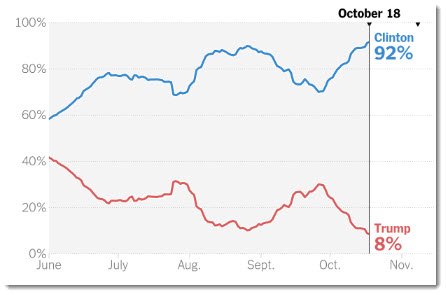
So for example, in modern society, we may be approaching have an election, and the pollsters will go out into the streets and begin asking people questions about the different candidates. They’ll ask a sample of voters for their opinions. And then they will take this knowledge of individuals, and they will use it to draw conclusions about the entire class of people that is of all voters. So if they go out into the streets, and they ask people at random, who will you be voting for in the coming election? And they ask, let’s say 500 people, and 300 of them say that they will be voting for Donald Trump or Joe Biden, whoever. They will say, “Aha! 300 of the 500 people polled said that they would be voting for Joe Biden. Therefore,” and they would draw a conclusion from the sample, “we think that 60% of voters are planning to vote for Joe Biden, based on the polls.”. And the question is, is that actually accurate? And the answer is, with regard to certainty, not at all. Those 500 people polled might not actually represent the entire class of voters. So really, we have no idea how anyone is going to vote other than the 500 people polled. It doesn’t give us any kind of certainty. And you’ll notice that politicians largely ignore the polls because they have to keep campaigning until the election is over. And the polls often turn out to be are the conclusions and the conclusions drawn from the polls often turned out to be false? Because inductive reasoning like this does not give us certain knowledge. However, we could say, is it probable that 60% of the voters will vote for Donald Trump based on the poll? And we can say yes, based on the poll, it’s probable. Or we can think about the quality of that sample and say, well, that sample was taken during the middle of the day when most people are at work. So we don’t really know who these people were that were walking around on the street at 1130 in the morning on a Monday. So we don’t know that this sample really represents the population. So while it’s possible, based on the poll, that 60% of voters could vote for Donald Trump. We don’t think it’s probable, and it’s certainly not certain that they will. So you can see how the quality of inductive reasoning depends on many different factors normally, the greater the sample size, the more certain the conclusions. The smaller the sample size, the less certain the conclusion. So if we’re looking at a population in America, where there’s 150 or 200 million voters and we’ve pulled 1000, you can see what a ridiculously small sample size that is. And just laugh at the idea that we’re drawing conclusions based on the observation of 1000 of 150 million individuals and yet this is what we do with respect to polls in politics.
The same is done with natural sciences. If we want to know whether cell phone radio waves, cause cancer, scientists will prepare an expense moment where they set up an experiment with, let’s say, 100 mice. And they will measure different physical characteristics of these mice in the presence of this cause that’s being investigated to see if the effect results in these mice. And they’ll find that we took 100 mice and kept them in a place where there were no cell phone, waves or signals, none of them developed cancer. We took these 100 mice and placed them in close proximity to a strong cellular signal and 80 of the 100 mice developed cancer. And we can look at these different situations and we can say 80% of the mice, in the presence of the cellular signals developed cancer 0% of the mice away from the signals developed cancer. Therefore, we conclude based on this observation, that the cellular signals or the or the waves, do, in fact cause cancer. And yet, there are all kinds of questions right? Why didn’t the other 20% of the mice get cancer? Then we have the other question of does this apply to the human body just because a mouse develops a certain condition? Does that mean that a bigger stronger animal would develop that condition? So you can see how the inductive reasoning based on observation of a sample size may be helpful in some circumstances? But it doesn’t it doesn’t it cannot possibly lead us to any certain knowledge, any absolute certainty.
So, is inductive reasoning helpful? Yes, in some circumstances, with lots of qualifications. But the question we really have to answer ask is, do we have questions to answer that are too serious for us to answer with the quality of knowledge that inductive reasoning offers us? And the answer is yes, there are many questions where we cannot settle for probability or possibility, but we need to know some things with absolute certainty. This is especially true in philosophy, where we desire to build a science a systematic knowledge, of different classes of things. This is necessary, because in addition to being sensual creatures, possessing sense and capable of observing things by means of the senses, we’re also rational creatures who have the power to draw conclusions about individual things based on knowledge of universals, or true this about entire classes of things. And in order to make judgments about unknown things, we can draw conclusions based on our knowledge of other things, which is inductive reasoning, or better, we could draw conclusions about individual things, from a certain knowledge of the classes of things to which those individuals belong. And this second kind of reasoning, where we move from a knowledge of classes to draw conclusions about individuals within those classes. This is deductive reasoning, where we reason down from classes to individuals. We reasoned down from the classes to the individuals rather than from the individuals, to other individuals or up to The classes.
Now, deductive reasoning, is the best kind of reasoning. And if we’re able to know universals with certainty, we can enjoy the most certain knowledge of any individuals. And so we can see very quickly, that the kind of certainty the kind of universality of knowledge that is available through deductive reasoning would be the ideal. And that’s the kind of knowledge that wise men seek. If we were left to inductive reasoning, we would feel like we live in an unknowable wilderness of constant uncertainty, and chaos. And if we did live in a world of chaos, inductive reasoning would be the only way to have knowledge of anything. We would only know things by experience or by observation. We don’t want to live like that. And thankfully, there is order in the world. And we learn this by means of divine revelation; we learned for certain that there is order in the world, order that we can depend on, and reason from, and use to make prudent decisions. We learned this right in the beginning of the book of Genesis, where we’re told that God created the world, and that when God created the world, he created things in classes. He created plants, and animals, even human beings, “each according to its kind”. So there are classes of things; there are not an infinite number of different living creatures, there are not an infinite number of different plants. This idea that living creatures change species and just sort of evolve and change from one kind into another is not true. If it was true, we would live in a world of chaos. But God tells us by His grace, through divine revelation, that it’s not so, but that He actually created things in classes, each according to its own kind. And we can see this in very simple ways. Around us, we can confirm this. If you put a cow in a field with a horse, they will not attempt to breed. The different species of animals know that they’re different species. This is designed into the natural world. If one species through some kind of corruption, seeks to breed with another species like a man with an animal, that man is understood to be depraved and insane. Things exist according to classes. This is necessary for creatures made with understanding and reason, who use the knowledge of the characteristics of classes to draw conclusions about individuals within those classes. And this is deductive reasoning.
This is the kind of thinking that God created man and man alone to make use of and live by. It’s necessary for our happiness to reason deductively from a knowledge of classes of things, from universal truths, down to individual things, that’s what gives us order. That’s what allows us to rule over the earth and subdue it to govern things to manage things to manage different affairs profitably. It’s only possible when classes exist with natural characteristics that can be done depended on. So we talk about things like “the laws of nature”, but the laws of nature depend on a permanency of the qualities of different classes of things. There can be no laws of nature if there are no classes of creatures that are designed with unchanging qualities. And again, this is why philosophically, attempts to promote some kind of evolution will always fail, if they’re examined philosophically. Natural science can only be useful, we can only talk about laws of nature, if there are classes of things that are created, that remain in a permanent state, whose qualities are always uniform.
We will rarely find scientists who speak with this kind of consistency. In one conversation, they’ll be talking about the evolution of species the survival of the fittest, constant adaptation to changing circumstances and they’ll go beyond any observation and jump to theories that have never been observed. A perfect example of this is the evolution of species. There has never been an observed evolution of species, yet scientists will irrationally draw such a conclusion or propose such a theory, even though it has not, and will not ever be observed. The inductive science, the inductive philosophy of the scientists rarely proves many of the theories in modern society that are presented to the public as facts.
One that I always raise in discussions is the existence of atoms; the idea that natural substances are composed of atoms. This cannot be said scientifically, because no one has ever observed, in any way, the existence of an atom. That’s why careful scientists will speak about atomic theory. They’ll speak about atomic theory. And they’ll qualify it and they’ll be careful, because they’re real scientists. They’ll always label it atomic theory. They’ll talk about evolution theory, because these things are not proven by means of scientific observation. These things are assumed as hypotheses or theories. And these theories are supposed to be tested through scientific experimentation. And this is where we see inductive reasoning and modern science sort of get out of control and go crazy and lead into all kinds of errors. And this is common in modern society. When you hear people say things like we know evolution is true. If you ask them for any evidence of such, they will offer none, and they will look at you like you’re being ridiculous, to demand evidence, and they’ll simply appeal to some unidentified body of scientists whom they say, have proved this or that and realize what they’re doing in such a situation. They have no evidence themselves, yet they’re speaking falsely in the name of inductive reasoning, and scientific observation. They’re presenting their view as being scientifically demonstrated, when in fact, it has never been demonstrated to them. And they really can’t explain why they’re going around pushing their ideas when they themselves have no scientific evidence to support their assertions. They appeal to this group of other people whom they say have observed these things. And I want you to compare that to religion. Compare what these people are doing to religion. I don’t know where the 10 commandments came from. But somebody told me that they were made by God. Moses and these writers of the Bible, they told me that God appeared to the Hebrews on Mount Sinai. And I go around saying these things to be true, because I believe, believe in the testimony of other men. When people talk about science, and they talk about things that have been proven, they talk about scientific facts, but they have no evidence themselves. They are simply professing faith in the testimony of others. And even in these cases, if you press them for names of who the specific scientists are, that they’re referring to, you’ll find they have no such names in mind. What they’re doing is sophistical. What they’re doing is misleading and dishonest. They’re asserting something that is simply their opinion, or desire. And they’re suggesting in a kind of intellectual bullying, that someone somewhere has physically demonstrated their opinion to be true. They have no such evidence, they can give no specific names, or details of where these demonstrations have taken place. And rather than presenting them to people as their personal opinions, they present them as scientific facts, which is simply dishonest and false. Because as I said, scientific investigation, and inductive reasoning will very rarely ever lead us to any certain knowledge about any class of things. The scientific method only applies to things that can actually be experimented upon and observed. That’s why the idea of scientific investigation is supposed to be reproducible. In other words, if I conduct an experiment that shows a certain thing to be true, I should be able to reproduce that same experiment and show or demonstrate the same results. And so we see that this modern arrogance of Natural Science, with all of these claims that we hear every day in common conversation about this being proven this being a fact, this being if you actually have the guts to push back a little bit, and ask about this evidence, asked about this proof, and try to nail down exactly where this proof is. Who obtained this proof where this proof can be observed, whether this proof can be reproduced and so on? After all, this is the stuff of science you’ll find that there’s rarely ever an answer to those questions. And this is the real limitation of inductive reasoning. It’s actually useful for very little. And really, inductive reasoning is supposed to be one tool in the hand of a philosopher who seeks wisdom, by means of deductive reasoning. And occasionally, in certain circumstances, inductive reasoning. Now, when we add to this, the question of divine revelation, things get very interesting. Many people suggest that it’s irrational. It’s irrational to believe Give in divine revelation. Yet, those same people will admit that it’s impossible for us to know many very important things with any certainty by means of human observation or reason alone. So this leads us to one of two possible options, either A, we were intended to live in ignorance, making decisions and conducting our lives with, with no knowledge of many of the most important questions in life, such as where we came from, or what happens to us when we die, and a million other things. Most of the most important questions in life will forever be unknown to us. And it’s necessary for us to live in that condition. And this is the position of modern science, which is called agnosticism. They believe that it’s simply impossible to know the answers to most of the important questions in life, which is a very convenient doctrine when you’re interested in living contrary to moral commandments of religion. The other option, though, is that, because it’s impossible for us to know the answers to many of the most important questions in life. We should expect that the power or person who created us, would reveal to us the knowledge of these things, so that we could live happily and make decisions based on the knowledge of answers to important questions that by ourselves, we can’t possibly discover. And so divine revelation would be expected for the sake of our happiness. So we have this agnostic position, which says, we’re simply left to not know the important questions of life, which I would say is not a reasonable conclusion, especially when we consider our desire for happiness. And the expectation of divine revelation, I would argue, is a more reasonable option because we can’t otherwise explain why we desire happiness. Why we feel offenses, and in justices, we act as if we’ve been designed to be happy. And if this is true, if we have this instinct to be happy, then it’s necessary for there to be a revelation of these most important issues. Divine Revelation is to be expected. And we find that God fulfills this expectation, and teaches us exactly what it is that we need to know beginning with the story of how the world was created, what kind of beings we are, what our purpose is, what the purpose is, of all of the different objects we see around us, what our end will be, how to obtain the desired end and so on. These are the exact kinds of questions that are answered in divine revelation. Now, the reason why divine revelation is so important in all of this is because God being supreme and infinite and eternal, being the source of all things, he can tell us with absolute certainty, the truths of classes of things that we are unable to observe. Here he, being omniscient, can reveal to us the universals, which when fed into the minds of rational creatures can lead to an infinite number of absolutely certain conclusions. And we can see that the rational mind of man is designed to operate While being fed with universal truths that are revealed to him by the Creator. And so the expectation of divine revelation is both reasonable and necessary for human happiness. And the agnostic position is an irrational one. That doesn’t make any sense. And the abuse and misuse of inductive reasoning to pretend dishonestly and sophistically, to have established certain truths in questions that cannot possibly be investigated, is one of the evils of modern science. So obviously, there’s a lot to continue talking about an unpacking. But I think that we’ve said enough to explain the limitations of inductive reasoning that the usefulness of inductive reasoning so we can never say What are you against sight? No, that doesn’t make any sense. No one can be against science, but we have to be sure that science is kept accountable to what it means to be scientific. That’s what’s wrong in modern society. People are allowed to just run wild with assertions that they claim are scientific, when none of us have any evidence. And that’s really, if you think about it, it’s the same thing as religion based on the testimony of people whose experiences and observances we don’t have. I don’t know what St. Bernadette saw at Lourdes. I don’t know, what the source of the stigmata were on our was on Padre Pio’s body, I don’t know that. I live by the testimony of other men, I have no evidence for most of the historical knowledge that I have. I trust in the testimony of other men. And yet, I consciously am aware that it could be inaccurate, there could be more to the story. And I distinguish between what I know that is absolutely certain. And what I know that may be probable or possible. But I reason that what God reveals is absolutely certain. What God reveals is absolutely certain. And we all have to admit that there’s a certain level of mystery in why we believe what we believe in the Catholic Church doesn’t, doesn’t confuse us or fake it on this. It tells us very clearly that faith, Christian faith is a divinely infused virtue. In other words, we really don’t know why we believe what we believe we simply believe. And we’re told that insofar as we believe in what is true, because it’s revealed by God, that belief is actually a grace that God Himself has given to us. So yeah, we get into some interesting discussions and things like that. But I think it’s sufficient to say that we’ve covered this question of what’s wrong with inductive reasoning and what its limits need to be we just need to make sure we keep inductive reasoning in its place. That’s a challenge we have in modern society.
I hope that’s helpful.
Mr. William C. Michael, Headmaster
Classical Liberal Arts Academy
Phone: (909) 281-7025
mail@classicalliberalarts.com
Not enrolled? Get started today for free!
The Classical Liberal Arts Academy works to research, restore, publish and teach the classical Catholic curriculum that has been enjoyed by wise men and saints through history. We invite you to study in our self-paced online courses and enjoy the benefits of online quizzes, written assignments, progress records and more. Get started with a free 30-day trial.
