
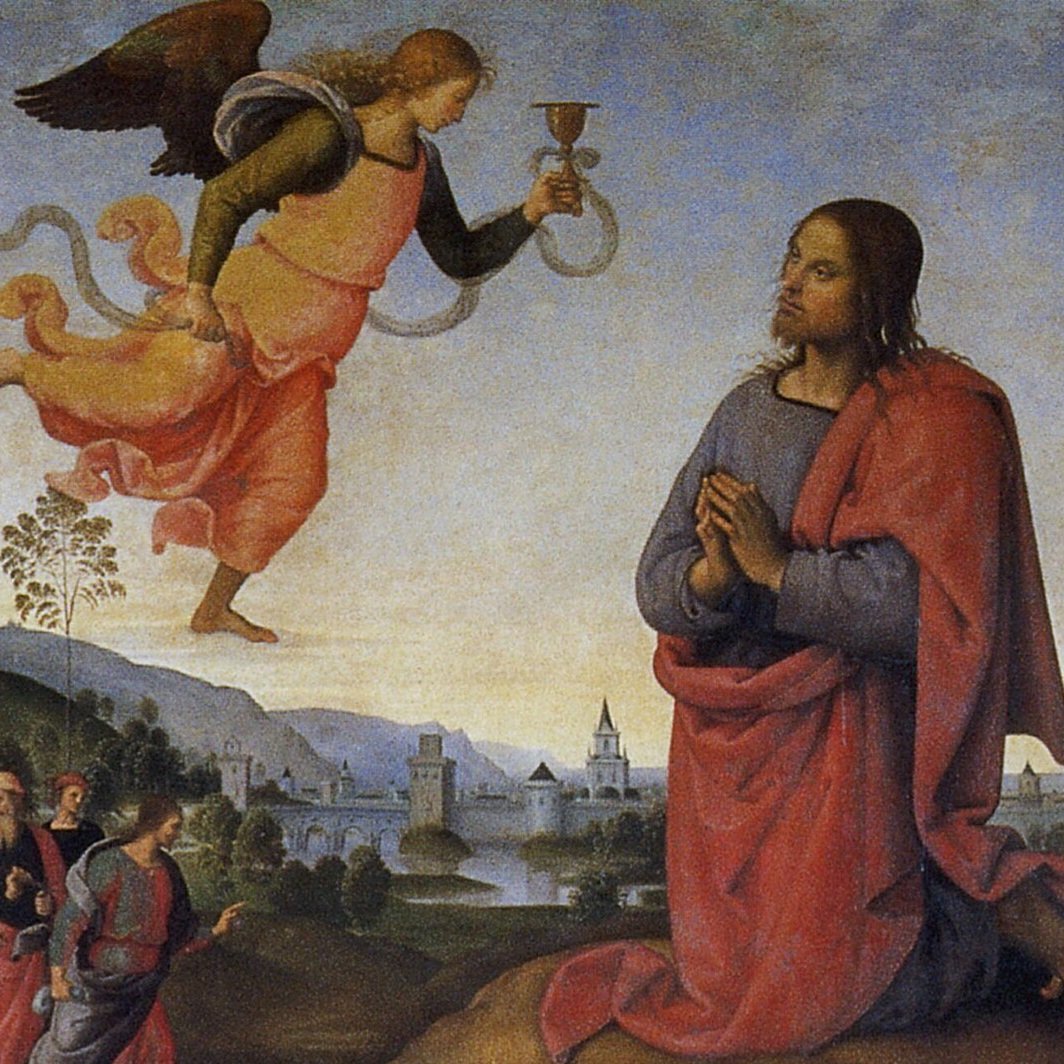
When we look back through sacred history, we find many examples of heroic lives among the patriarchs, prophets, apostles and saints. We find men like Joseph who interpreted the dreams of Pharaoh and was exalted to the highest office in Egypt; David, who conquered the enemies of Israel and prepared for the construction of God’s temple in Jerusalem; Solomon, to whom the leaders of the world came for counsel; Daniel who stood before the kings of Persia and amazed them with his learning and virtue; John the Baptist who fearlessly preached repentance to the face of the adulterous king Herod; St.Paul who “evangelized the “turned the world upside down” by his evangelistic missions throughout the gentile world–we can go on and on, giving thousands of examples through thousands of years.
God’s people have lived heroic lives and achieved amazing successes, both temporal and eternal.
Yet, when we look around in modern Christian circles, we find the disciplined, heavenly-minded lives of these men scoffed at. We find Christian people lacking education, lacking discipline, lacking ambition, laughing at their vices aith an”Aw, shucks…” attitude that finds them dependent on unbelievers for the necessities of life–even basic education. At the same time, we find them critical of the institutions and people they depend on, mocking government officials, elite universities, innovative business leaders, etc., as if temporal success is an evil to be avoided. This combination of incompetence and criticism is somehow imagined to be “humility” by Christians, while being called “Christian arrogance” in modern society.
At the root of this false idea of humility is the idea that ambition is evil.
The desire to achieve something great, which requires planning, investment, discipline, sacrifice, effort and patience is seen as “covetousness” or “pride” in modern Christian circles. The willingness to persevere in the pursuit of a goal, despite many failures and difficulties is seen as “foolishness”. An easy-going life, content with creature comforts is presented as “the good life”, though this life increasingly resembles that of irrational animals with no religion at all.
Godly Ambition
In Philippians 2, St. Paul teaches us:
“Let this mind be in you, which was also in Christ Jesus: Who being in the form of God, thought it not robbery to be equal with God: But emptied himself, taking the form of a servant, being made in the likeness of men, and in habit found as a man. He humbled himself, becoming obedient unto death, even to the death of the cross.”
A passage like this is embraced by modern Christians, because it is used to suggest that we should “be “take the form of a servant”, “humble ourselves”, and “take up the cross”. All of this is presented in the context of being simple, unambitious people who take it easy and endure the criticism of non-Christians. In fact, the more one is criticized by non-Christians, the more one is like Christ.
Unfortunately, the criticism of Christians is often justified and not “persecution”. They are living on social services while not paying taxes and boasting of having large families. They are identifying as “charitable organizations” while spending all of their time campaigning for their favorite politicians. They are sending children to secular public schools and complaining that teachers are not promoting Christian beliefs. They are caught breaking the laws in business, abusing children, stirring up trouble in the streets, pressuring elected politicians to act contrary to their campaign promises, on and on. These criticisms are not “Christian persecution” but real faults. Christians are seen as using benefits of modern society without contributing to them. They are seen as selfish rather than sacrificial.
The Christians, however, interpret this criticism as “the Cross” and imagine themselves to be sharing in Christ’s suffering. In fact, they are being called out by non-Christians who, in many ways, are living more in line with the way of Christ than the Christians are.
St. Paul, however, says more, and modern Christians seem to ignore this:
“Having so great a cloud of witnesses over our head, laying aside every weight and sin which surrounds us, let us run by patience to the fight proposed to us: Looking on Jesus, the author and finisher of faith, who having joy set before him, endured the cross, despising the shame, and now sitteth on the right hand of the throne of God.”
Hebrews 12:2 DRA
Our Lord, we see, did not live a laid-life, loafing about and leaning on public benefits. He did not call ambitious ends “proud” or “materialistic”. He Himself lived in pursuit of the most ambitious of all ends: the glory of being the Ssavior of the world. He prayed for this glory during His earthly life:
“Glorify thou me, O Father, with thyself, with the glory which I had, before the world was.”
John 17:5 DRA
Jesus was certainly ambitious and His followers are as well.
True Humility
The difference between the false humility found among modern Christians and the true humility found in Christ is that true humility is ambtious, whereas false humility is not. It is here that we find that false humility is deceiving, being, in fact, prideful.
Prideful men and women will not undertake ambitious goals because they are afraid of failure and difficulty. They are willing to endure the criticisms and mocking of others for the sake of their self-serving, comfortable lives, but not for challenging projects. The benefits of their comfortable lives are worth the cost of criticism, but the benefits of Christian works are not.
Christ’s life was incomparably ambitious, but where true humility is found is in His acceptance of the humiliating means by which his goal was to be attained.
To conquer the world and gain the greatest of all imaginable honors, Our Lord could not take up the sword as Alexander did, whose end was shameful. Jesus had to earn His titles through charity. He had to save His people from their sins, by entering into their weakness, making Himself a worthy sacrifice, accepting the humiliation of charity, and suffering perfectly for their atonement. He had to endure the appearance of being conquered by His enemies and bear the shame of their abuse, and He did so willingly.
True humility is the pursuit of heroic ambition by means of true virtue, and the seven virtues are: faith, hope, charity; temperance, fortitude, justice and prudence.
Where heroic ambition is not found, there is no true humility.
Where virtue is abandoned, there is no true humility.
When we pursue great ends, for the love of God, we must do so according to the commandments of God. Our obedience constantly proves our ambition to be good.
Rather than justifying our lack of ambition, we should be aiming for noble goals, which God inspires in us. We should seek to achieve ambitious goals, but resolve to seek them by means of virture and at any cost. For example, a Catholic man can say, “I want to become a city mayor promote justice in my city.” and then resolve to pursue that goal while attending Mass every Sunday, saying His prayers daily, supporting his own political work by honest work, etc.. A Catholic woman can say, “I want to raise my children to attend the greatest universities in the world.”, while resolving to do so without every compromising on Catholic faith and morals.
What will happen when we aim for great ends, but resolve to maintain Catholic principles, is that the way by which those ends are achieved will become difficult and humbling. We will have to find and follow paths others do not know of or take. We will have to be patient and wait for opportunities to move forward that allow our principles to be maintained. We will be criticized by others who move ahead faster than us, but without our principles.
It is this devout way of proceeding that prideful men and women will grow weary of and abandon, ending their pursuit of great ends. They will claim that the end is not possible, or not good for Christians to pursue, but this is false. The truth is that they would not accept the humiliating means by which the ends must be pursued and, consequently, declared themselves to be unworthy of them.
When we find Christians who do accomplish great ends, we find that it is by this way that they pursue them. They do not quit when things become uncomfortable, but persevere. We admire them because they persevere.
This life whereby Christians pursue ends worthy of the name “Christian” by virtuous means is true humility. It is this life that leads us to suffer honorably for worthy causes. It is this life that makes us worthy of human and divine honors. We can be assured that God will justly reward us for such works, but we cannot be assured that men will honor us. This is why we see these ends not for human praise, but for that praise which comes from God, who see all things and rewards all men perfectly according to their deeds.
This is the virtuous life inspired by faith, hope and charity, which Christ modeled for us.
What are your ambitious goals?
My ambitious goal is to restore classical Catholic education in the 21st century. I’ve been working at it for almost 30 years now.
Mr. William C. Michael, O.P.
Headmaster
Classical Liberal Arts Academy
