

Yesterday, I posted a talk on whether we can have assurance of salvation. I spent most of the talk criticizing Protestant attempts to answer that question. I explained that they need to answer that question because they struggle with the issue of whether or not they are saved. It’s a consequence of their own bad teaching.
I picked on Protestant teaching for quite a bit, and when I finished the talk and posted it, I realized that while it’s easy to tear apart Protestant teaching, it’s also easy to point out all the flaws in Protestant teaching. One thing we need to ensure is that we speak positively and show how these problems are avoided in Catholic teaching. Not only should we point out what’s false in Protestant teaching, but we should also take time to show what’s true in Catholic teaching.
So, in this evening’s talk, I would like to take up some of these common topics and phrases that Protestants talk about, point out their problems, and then show what the actual Catholic teaching is on those issues and how it solves the problems that arise from Protestant teaching.
I was thinking this afternoon about a topic for the talk, and I thought that something like “Same Vocabulary, Different Dictionary” would be a good title or topic. That’s the main idea I want to focus on—the real confusion that develops with Protestantism is that they keep all of the old vocabulary. They continue using Catholic words and phrases, ancient words and phrases, but the meanings for those words have changed.
This is a logical fault called equivocation. To use the same word but change the meaning is a fallacy of equivocation. It destroys any ability to reason because reasoning depends on language. Spoken words are signs of ideas. If you use the same word but change the idea behind it, it causes all kinds of chaos. The words are used, say, in Bible verses, and you’re using the same words but changing the meanings of those words. This causes all kinds of confusion.
So, I’d like to present a talk that doesn’t just negatively pick on Protestantism but shows how these things are actually—not to say corrected because Catholicism existed first. It’s not like there were problems, and then Catholicism came around and solved them. The truth was already established, and Protestantism came along and screwed it all up. I want to show how Protestantism has actually caused confusion and error.
Let’s start by thinking about this phrase that’s always used, which was focused on in my talk on the assurance of salvation: “born again.” If you’ve been around Protestants or evangelicals at all, I’m sure you’ve heard the phrase “born again.” Not so much today because “Evangelical” has become more common. Back in the 70s and 80s, it was much more common for non-Catholic Christians to identify as “Born Again Christians.” They’ll ask, “Are you a born-again Christian?” or “You’re a Catholic, you’re not a Christian.” This idea of being a Christian, rather than a Catholic, was tied to this idea of being born again.
I talked about this yesterday, and I recommend that you listen to the talk I gave on how Protestants try to answer the question of how we can have assurance of salvation and how Catholics answer that question. We’ve got this phrase “born again.” Where in the world does this come from? Where does this idea come from? It comes from the Gospel of John.
This is why equivocation is dangerous. This is why interpretation without authority is dangerous. This is why reading the Bible on your own when you’re new to the Bible, and having Protestants tell you what it means, is a problem. We find this Protestant phrase in the Gospel of John. If you read the first two or three chapters of the Gospel of John, you’ll come to a scene where one of the leaders of the Jewish community, a man named Nicodemus, comes to Jesus at night. He comes to Jesus at night, which signifies his uncertainty about Jesus. He’s fearful; he doesn’t want his approach to Jesus to be seen in the daylight, so he comes at night.
He says to Jesus, “We,” that is, the Jewish leaders, “know that you have come from God and are a teacher. For no one can do the things that you do unless God is with him.” He comes to Jesus and appears to be very respectful, saying that the Jewish leaders know that God is with Jesus and that his mission and work are from heaven. It seems that this Jewish leader is coming to Jesus at night, afraid of being outed as a Christian, but he needs some clarification. Let’s give him the benefit of the doubt and assume that he’s sincere and not just trying to test Jesus in some way.
Jesus responds to him in pretty mysterious language. He says to him, “Unless you are born again, you cannot enter the kingdom of heaven.” Unless you are born again, you cannot enter the kingdom of heaven. There we have this popular Protestant phrase “born again.” Unless you are born again, you cannot enter the kingdom of heaven. You can see how that verse becomes a great bit of ammunition for Protestants because we’ve got this scene where Jesus is talking to a religious leader, and he tells the religious leader that he is not saved. Unless he’s born again, he can’t be saved.
So, if we think about the Protestant message, we can see how that verse, lifted out of the Bible, taken into Protestant hands, and explained with Protestant ideas, can be used to say that all those Catholics and all the popes and bishops, all the religious leaders are like Nicodemus. Jesus comes to these religious leaders, and he doesn’t care about their traditions. He doesn’t care about their ordination. He doesn’t care about the history of their church. He doesn’t care about any of these things. All that Jesus cares about is whether or not a man has been born again. It doesn’t matter if you’re a pope, a bishop, or a homeless person. There’s only one thing that matters: whether or not you’re born again. Again, twisted out of the context of the passage, which I’ll talk about in a minute.
The Protestants take this interaction between Jesus and Nicodemus, a Jewish leader, and they apply it to the relationship between Protestants, on whose side Jesus, you know, obviously, must be, and Catholics, who are represented in their interpretation by Nicodemus. All of these Protestants, especially those who are ignorant and are reading this for the first time, don’t know the context, don’t know what the issues are in the New Testament. They see that and they say, “Wow, it’s right there, right there in the Bible, Jesus, that kind of isolated, maverick spiritual person who just follows the Holy Spirit, speaking truth to power, telling this religious leader that he’s not even saved because he’s not born again, just dismissing all of this religion, all of this gross authority and rules and all of this stuff, tradition. And saying, ‘All that matters is that a person is born again. There’s no church needed, no ordination needed, no authority, no rules, no history, no tradition. It’s just about an individual and Jesus, and whether or not that individual has been born again.'”
You can see how the Protestants grab that verse and run with it, using it to present a false argument against Catholicism that appears on the surface to be quote-unquote biblical. The reason why this even has an appearance of being biblical is because the context of the passage is not established, is not known. This is partly caused by the division of the Bible into chapters. The division of the Bible into chapters is something that was done later. It’s not like every prophet and apostle sat down and wrote chapter one, then wrote a chapter and then started chapter two, and wrote a chapter. These original books had no chapters. The chapters and verse numbers were added later just for the sake of being able to reference passages of Scripture as we do. But sometimes, if we read the Bible all chopped up like this, we can lose the narrative, we can lose the context of different verses. This is what happens here with this scene with Nicodemus.
As I said, this is John chapter three. If we think about the narrative of John’s Gospel, it starts with an introduction where he talks about the Word being God and being with God before all things, that all things were created through Him, and that nothing exists that wasn’t created by Him. Then we read about John the Baptist coming and preaching the kingdom of God, that the kingdom of God was at hand, and calling Jewish people, notice the storyline, calling Jewish people to prepare for the coming of the Jewish Messiah. When Jesus comes, John points Him out and says, “Behold, the Lamb of God.” He says, “This is the one who I spoke of before, who, coming after me, is before me, because He was before me.” We have the ministry of John. Then we have the message in John 1:14, which says, “And the Word became flesh, and dwelt among us. And we beheld His glory, glory as of the only begotten of the Father, full of grace and truth.” Because the law, the Mosaic Law, the Jewish law, came through Moses, but grace and truth have come through Jesus Christ. John goes on and says, “No one has ever seen God. No one has ever seen God. But Jesus, the Word, the Son of God, who was in the bosom of the Father, who is in the bosom of the Father, spiritually speaking, He has revealed Him. He has explained Him.” The verb in the Vulgate is “enarravit.”
So, the message of the Gospel of John is that the Jewish religion has reached its fulfillment, and the Messiah has come. The Messiah has come who leads the Jewish people beyond the law of Moses and brings to them grace and truth from God. John says, “I baptize you with water as a ritual, as a symbol, but He who comes after me, He’s not in the ritual business, He’s not baptizing with water, He baptizes with the Holy Spirit and with fire.” This is the message of John chapter one: Listen, Jewish people, your Messiah is coming. This is Him. This is the Word of God, who was in the beginning with the Father, who has become flesh and will dwell among us. This is Emmanuel, that name which was prophesied, which means God is with us. This is the fulfillment of everything we’ve been waiting for as Jews. Repent, and bring forth fruits worthy of repentance. Prepare, because the Messiah is coming. The time has come. This is the message of the Gospel of John. Jesus is coming into the world to reveal to us the grace and truth that comes from God. John 1 also says, “He came to His own, and His own did not receive Him, but as many as received Him, to them He gave power,” dedidit eis potestatem, “He gave to them power to become sons of God.” This Messiah is coming, and those who receive Him, He will give them power to become sons of God, to those who believe in His name.
This is the message: the Messiah is coming to the Jews, and those who believe in Him will be given all of these spiritual graces. They will have the truth revealed in its fullness by the Word of God Himself, who comes from the Father. This is the message of the Gospel of John. Then we move to chapter two. What do we have in chapter two? We have Jesus now, an adult. We have the wedding feast at Cana, one of the Luminous Mysteries of the Rosary. There is no wine. Mary tells Jesus. Jesus says to Mary, “What does this have to do with us? My time has not yet come.” Mary then says to the servants, “Whatever He tells you, do it.” Jesus, famously, miraculously, changes water into wine in a blink of an eye miracle, a work of divine power, a wonder. His disciples, the men whom John the Baptist sent to follow Him, are at the wedding feast. They see this, the first of His miracles. It says, “Here in John chapter two, Jesus first manifested His glory to His disciples.” What John had told them, Jesus let His disciples see it. You can imagine, for the first time, all of a sudden, for those disciples, all of whom are Jews, remember, these are all Jewish characters, this Jesus has changed from a guy that John was talking about to “Holy mackerel, he just turned water into wine.” So now, things are going to start getting crazy. There’s a crowd of people, not everybody knows, and John is careful to say this. The disciples know, Mary knows, the servants who brought the water to Jesus, they know. We can imagine that word started to spread that this guy has miraculous power. So, the disciples now have a different view of Jesus. He’s a miracle worker. He’s at least a prophet. John the Baptist was not working miracles. When we’re talking about miracles, we’re talking about Elijah, we’re talking about Moses. John the Baptist, realizing that the time has come for the Messiah to be revealed, says, “He must increase, I must decrease.” John sends the men who were following him to go and follow Jesus.
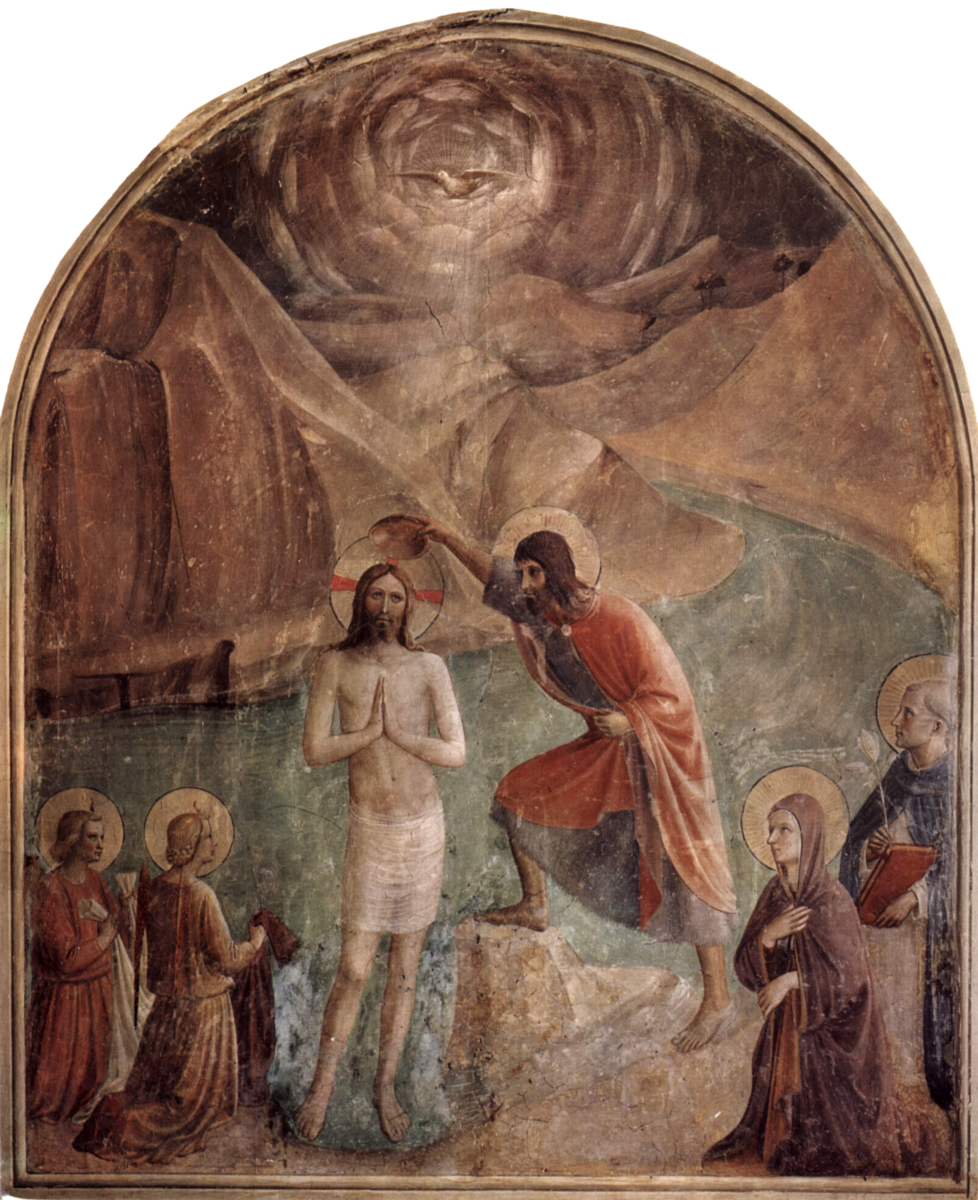
So, Jesus has quite a posse developing, but He’s got His core group of chosen called disciples. Just as John was baptizing, remember, he said, “I baptize with water,” but He will baptize with the Holy Spirit and with fire. We might think, if we’re thinking like Protestants, that Jesus has a baptism of the Spirit, this baptism of spiritual fire, as it were, not the water baptism of John. But that’s not the case because in John chapter two it says, Jesus was baptizing disciples. In other words, just as people were coming to John, as John called them to repentance to prepare for the Messiah, Jesus took over that ministry. Now, Jesus is baptizing men with water. He’s baptizing men with water, just like John. But John adds some more detail and says, “Actually, Jesus was not baptizing anyone Himself. His disciples were baptizing men who were coming to Jesus.” So think of this scene. Jesus is there; He is the one who baptizes with the Holy Spirit and with fire. That is the true capital B baptism. But here are His disciples, baptizing with water. What we have here in John chapter two is the revelation of the sacrament of baptism. What it really is, the disciples, that is the Church, is baptizing with water. Christ is present, who will not at that moment in salvation history, because He had not yet suffered, He had not yet ascended, and had not yet given the Holy Spirit. But the time was at hand. This baptism by the disciples, by the Christians, as it were, with water, was the true baptism of the Christian faith. It was left over from Jewish religion, but on the verge of being plugged in, as it were, to the real power and force of baptism.
Chapter two, along with chapter one, really focuses on baptism. John the Baptist in chapter one, John the Baptist in chapter two, water turning into wine—that’s strange, right? In the context of, right in between two passages about water baptism, we have the changing of water into wine. That’s strange, right? Water, water, water. And then, as we go through the end of chapter two, again, it’s baptism, people coming to Jesus being baptized by the disciples. They’re coming to Jesus in the daylight. They’re confessing their sins, they’re acknowledging Him to be the Messiah, word is getting around about His miraculous power. The testimony of John the Baptist is getting around. People know that
John is a prophet. He’s telling them that Jesus is the Messiah. Word is starting to spread. People are coming to Jesus, believing in His name. The sign of their commitment to the Messiah, their initiation to the Messiah’s fellowship, is that they’re being baptized publicly, in the daylight, with water, believing in Jesus’s name.
Then, at the end of chapter two, and again, remember all that context is baptism, baptism, baptism, following Jesus, Jews, believing in Jesus’s name and following Him in the daylight, publicly showing their faith by baptism. Then there’s this subtle line at the end of John chapter two, which says that many believed in Him, but Jesus did not entrust Himself to them because He knew what was in man. In other words, it seemed like everything was going well, but Jesus knew that men are deceitful. He wasn’t deceived by these initial results. This was just the beginning. There was a lot of hype, a lot of excitement, but His message to the people and the religion that He was about to establish and bring into the world was no health and wealth gospel, religion. It was a religion of self-sacrifice that would be symbolized by the crucifixion. He did not entrust Himself to men, for He knew what was in man. Those are the last words of John chapter two and then, right after that, Nicodemus comes to Him by night. So in the context, we’re talking about baptism. We’re talking about men coming to Jesus publicly, following Him, and being baptized. Nicodemus, at the beginning of John chapter three, doesn’t come to Jesus like everybody else. Nicodemus doesn’t come during the daylight, publicly declaring his faith that Jesus may be the Messiah. He doesn’t come publicly confessing his sin, seeking baptism. He comes at night, flattering Jesus. “Jesus did not entrust Himself to men, for He knew what was in man.” At night, Nicodemus, a leader of the Jews, came to Jesus and said, “We believe that you are a teacher come from God, for no man can do the things you do, like turn water into wine, unless God is with him.” “Jesus did not entrust Himself to men, for He knew what was in man.” So keep the context. Don’t get distracted by the change of the chapter. Keep the story, keep the narrative going.
Jesus then replies to Nicodemus, “Unless you are born again, you cannot enter the kingdom of heaven.” Now, to most Protestants, it seems like Jesus gives this bizarro answer out of left field. John 3:1, “There was a man of the Pharisees, a leader named Nicodemus. He came to Jesus by night and said all of these nice things, and Jesus said,” spoke to him in some crazy language. You’ve got this awkward, weird conversation between Jesus and Nicodemus, where all of a sudden Jesus starts talking about this idea of having a radical conversion experience. “Unless you’re a born-again Christian, unless you have a moment in your life where your heart changes, and you accept Jesus as your Lord and Savior, and you have a personal relationship with Jesus.” It doesn’t even make any sense in the context. Because it’s nonsense.
When Jesus says to Nicodemus, “Unless a man is born again, he cannot enter the kingdom of heaven,” He’s talking to a man who knows exactly what’s going on. He’s talking to a man who knows that people who believe in Jesus are being baptized. He’s coming by night, talking about believing in Jesus and dodging baptism. So Jesus cuts him off and says, “Look, if you’re not going to be baptized, then you’re not going to enter the kingdom of heaven.” Being born again, in the context, we can clearly see that it’s referring to what everyone else has been doing in John chapter one and John chapter two. Everyone has been confessing their sins, following Jesus, and being baptized. Nicodemus knows everything that’s been going on. He knows all about Jesus’s works; he says so himself. Jesus says, “Unless you’re born again, you cannot enter the kingdom of heaven,” very clearly meaning unless you get in line behind me and are baptized, which even I have been. Remember, Jesus Himself submitted to baptism to show how necessary baptism is. Jesus Himself was baptized.
So, when you’ll hear Protestants sometimes talk about whether baptism is really necessary, or is it just a symbol. Baptism is so necessary that Jesus Himself insisted on being baptized. John said to Jesus, “You don’t need to be baptized, I need to be baptized by you.” Jesus essentially said, “That’s not right. Even I must be baptized.” That’s how necessary baptism is. And here we have this Nicodemus, who thinks that he doesn’t need to be baptized. You know, he can just be the guy who says that he believes in Jesus. I mean, if I were to take the Protestant gospel and look at Nicodemus and read what Nicodemus just said, we’d all have to say Nicodemus is saved, right? Nicodemus says, “I believe that you are a teacher who has come from God. Because no one can do the things you do, unless God is with him.” That sounds like salvation by faith alone. But there’s no such thing as salvation by faith alone. You have to be baptized. Even Jesus is baptized. So Jesus corrects Nicodemus and says, “Unless you are born again, you will not be saved.” When He says born again, He’s talking about repentance and baptism. “You must repent, believe, and be baptized into My name, like everybody else, or you will not be saved.”
It doesn’t matter if you’re a Jew. It doesn’t matter that you’re a Jewish leader. That age of Mosaic worship has come to an end. The Messiah is here, the Messianic religion is being instituted. You must be born again. You must get in line with everybody else and follow Me. He goes on and says, “That which is born of the flesh is flesh,” talking about his Jewish identity. “You are a member of the people of God, Nicodemus, that’s true. The people of God with respect to the flesh. You have been born as a descendant of Abraham; you’re circumcised as a Jew. You are a member of God’s people according to the flesh, that was an imperfect and temporary arrangement, which God has respected for 1800 years. But that relationship to God in the flesh was merely a sign that circumcision of the foreskin of your body was merely a sign of the fulfillment, which would be the circumcision of your heart. That which is born of flesh is flesh. That which is born of the Spirit is spirit. You have become a Jew by natural birth according to the flesh. You have become a member of God’s chosen people according to the flesh, but the age of the flesh has come to an end. The age of the Spirit, the fulfillment of the promise of redemption is at hand. And you must now be born not only of the flesh, as a son of Abraham, but you must be born of the Spirit, as a Christian. That which is born of flesh is flesh, that which is born of the Spirit is spirit.”
In another place, remember Jesus says, “Don’t think to say to yourselves, ‘We are Abraham’s children,’ or ‘We have Abraham for our father.'” That’s true. For the last 1800 years of salvation history, that was sufficient to obey God. But as of today, Jesus is saying, that is no longer sufficient. You must now become not sons of Abraham, but sons of God. And how do you become sons of God? Go back to John 1. Jesus came to His own. I think it’s verse 11. Yeah, verses 11 through 15. Jesus came to His own and His own did not receive Him. But as many as received Him, here’s the verse, “He gave to them power to become children of God,” to become filii Dei, sons of God. That’s what He’s saying to Nicodemus. He’s saying, “It’s no longer sufficient to say, ‘I’m a son of Abraham.’ It’s now time to become sons of God. And the only way you can become a son of God is by receiving Me, by believing in My name, by following Me. The way that you begin following Me, the rite of initiation, as the Church teaches, is by baptism.”
This is an adult baptism. So we have to not get this confused with infant baptism, which is a different subject. Here we’re talking about adult baptism. We’ve got to think about the context of adult baptism. Imagine being an unbeliever, learning about Christianity, being given the grace of faith, and believing that Jesus is the Savior of the world. Believing that you are dead in trespasses and sins, need to be redeemed, need to be given spiritual life, and the only way to obtain that spiritual life and power is from Jesus through His Church, which again is another subject for a different talk. But remember, we have this model of Jesus being the Savior, being the mediator between God and men, but serving this salvation through His disciples. Jesus Himself was not baptizing, but His disciples were baptizing. John is careful to explicitly tell us that Jesus was not the one administering the baptism; His disciples were. And yet, it was true to say that Jesus was baptizing more disciples than John. Jesus was baptizing, but Jesus was not baptizing. That’s the sacramental ministry of the Church.
So this time has come, where you must not content yourself with being a son of Abraham according to the flesh. But you must come to the fulfillment, the perfection of the way of salvation by becoming a son of God. And the only way that you can become a son of God is to receive power from Jesus by receiving Him, by believing in His name, believing that He is the Messiah, following Him, and obeying everything that He teaches. This is what Jesus says to Nicodemus when He says, “You must be born again.”
Now, when we go back and consider the Protestant use of this term “being born again,” being born again does not mean having a radical conversion experience. Because that radical conversion experience is not in your power. You can’t make yourself be born again. If born again means converted, you can’t make yourself be born again. You can’t be born again if being born again means that the Holy Spirit causes you to believe. But Jesus is telling Nicodemus that he needs to be born again. And He’s telling Nicodemus that he needs to be born again because being born again is something that Nicodemus can go and do. Nicodemus can go and be born again if he wishes; he must be born again. Think how stupid it would be. Think how stupid it would be if the doctrine of that passage was that a Jewish man came to Jesus, confessing his faith in Jesus, which is what the Protestants say is all that anybody needs to do to be saved. And which the Protestants would say proves that Nicodemus is already born again because he believes
. And when this Jewish man, Nicodemus, comes to Jesus, he says, “I believe that you are a teacher sent from God because no one could do the things you do unless God was with Him.” Jesus would look in his face and say, “Tough luck, buddy. You’re not born again. I don’t care if you think I’m a teacher come from God. I don’t care if you believe that I’m from God. You’re not born again.” Think how stupid that message would be.
If being born again means having a conversion experience or having something done to you by the Holy Spirit, which is how the Protestants describe being born again. Being born again to the Protestants means the Holy Spirit changes you and opens your eyes and causes you to believe. If that was true, Nicodemus would appear to already be born again. As far as we know, Nicodemus actually is a true believer. Remember, this stuff is being revealed real-time for these men. They’re not looking at this with 2000 years of history. They’re living in it as it’s happening moment by moment. Nicodemus is already professing faith. Jesus is telling him he’s not born again. And unless he’s born again, he cannot enter the kingdom of heaven. What does he need to do? Nicodemus needs to be baptized and publicly join the Christian community. And if he doesn’t publicly, visibly join the Christian community, which begins with baptism, he cannot be saved. Nicodemus is being told by Jesus that he must receive Jesus, believe in His name, and follow Him. And that he must submit himself to the sacrament of baptism, which again, is a little confusing at that moment in history. Because there’s this strange gap where the kingdom has already come in that Jesus is present. But the kingdom has already has also not yet come, because Jesus has not yet suffered.
Being born again is something that you can and must do. You must do it. Jesus could command men to be born again—”Be born again.” In Protestant teaching, a person can’t go and make himself born again. This is clear proof that their use of the phrase, their redefinition of the phrase, is impossible. It’s false. Their interpretation of that passage of scripture is false. If we read chapters one, two, three, and four as one narrative—which it actually is—we can clearly see that their interpretation is impossible. It would make no sense. Being born again is not something that the Spirit does to you. Being born again is something that you’re commanded to do. It’s in your power as a human being.
You must, just as John the Baptist was already telling people, believe that the Messiah is coming and is now here. You must repent of your sins. You must be baptized, and you must follow Him. If you don’t, it doesn’t matter if you are a Jew, it doesn’t matter if you’re a son of Abraham. It doesn’t matter. Because unless you continue on to perfection in true religion, you will not be saved. That’s the message of John chapters one, two, and three. Think about Mary talking to the servants, “Do whatever He tells you.” That’s the message of the Gospel of John. Jesus is the Son of God, Jesus is the Messiah. Do whatever He tells you. “To His own He came and His own did not receive Him, but to as many as did receive Him, He gave to them power to become sons of God.” Notice the message: “To as many as received Him, He gave to them power to become sons of God.” Man receives Jesus actively, freely, voluntarily. As a result of that reception of Jesus, Jesus gives to man power.
In the context, we see that this is conducted through the sacrament of baptism, which again was kind of strange at that point because Jesus is sitting there in the flesh. The disciples are baptizing as they will after Jesus ascends into heaven. But Jesus is present there, and not baptizing, because baptizing men with water is not His role. He has given that role to His priests. His disciples are baptizing the men. He, as John the Baptist says, is the one who baptizes with the Holy Spirit. Baptizing with the Holy Spirit and with fire must be what it means to give to them power to become sons of God. If you stay in the context of John chapters one, two, and three, you can see that the same thing is being explained in different scenes, to different people, in different ways. There are different illustrations, different explanations, different terms, but the same simple message is being shared: The eternally promised Messiah has come. And it’s Him. It’s Jesus of Nazareth. He is the one who brings the grace and truth of God to men. He is the fulfillment of everything that was spoken by the Law and the Prophets. Everything was leading us to Him.
Being a Jew, for 1800 years, was all that one could do to live according to God’s will. But now, the kingdom of God is at hand. The Messiah has been manifested. The Word has come and dwelt among us. We behold His glory. We see Him with all of His divine power, turning water into wine. And what does He say to us? “Repent, and be baptized.” That’s what you must do. Nicodemus says, “I’m not going to go through with the whole thing.” Jesus says, “Unless you go through with the whole thing, you’re not going to be saved.” Because being a Jew is no longer sufficient. “That which is flesh is flesh. That which is spirit is spirit.” You must become not a son of Abraham, but you must now become a son of God. And the only way to become a son of God is for Me to give you power. And the only way for Me to give you power is for you to receive Me and be baptized. That’s what it means to be born again. There is no way to separate water baptism from the baptism of Spirit and fire as John says—they’re one and the same thing.
Jesus is there as the disciples are baptizing. The baptism of the disciples is the one and only baptism. The day will come when that baptism, administered by the disciples, will not only serve as a symbol of being cleansed and purified, but it will also be the instrument by which Jesus gives power to men to become sons of God. The sacrament is not a sign as the Protestants teach. The sacrament of baptism is both a sign and the instrument by which the grace is given. Believing with words, like Nicodemus, salvation by faith alone is not sufficient. Baptism is necessary for salvation. Why? Because the Messiah said so. Mary tells the ministers, “Do whatever He tells you.” John the Baptist says, “Behold, the Lamb of God. Go follow Him.” Jesus says, “Follow Me.” Nicodemus says all the right things but doesn’t follow, doesn’t obey, doesn’t do what Jesus says to do, doesn’t do what John said to do, doesn’t do what the disciples are telling men to do. He comes with words, to have a personal relationship with Jesus, and is told that that’s not true religion. “You must be born again.” It’s something you can do. You must get in line, join My Church, and be baptized by My chosen disciples. It doesn’t matter if you’re a son of Abraham. That’s what it means to be born again.
So in this talk, I’m going to wrap this up now. What we see is our first example of a phrase that’s been hijacked by Protestants. And a verse, or a couple of verses, that have been extracted from the context of the Gospel of John, interpreted by this Protestant message, and then presented to people in isolation from the original context, which creates a false message. What the passage actually teaches is exactly the opposite of what the Scripture teaches. What Jesus is teaching is that the Jewish religion and the Jewish priesthood are being replaced by Christ’s own chosen disciples. If you wish to be saved, you need to come to Peter, James, John, and Andrew. You need to be baptized by them because they are the leaders of the new Messianic community. The Jews of the former system must accept the Messianic system with a new set of rulers, as it were, and they must submit to this new institution, this new community. Their privileges from the Jewish—there’s a word for it that I can’t think of—economy could be used. But there’s a word that I know Protestants use. I can’t think of it but your Jewish benefits are no longer sufficient.
We don’t have in this encounter between Jesus of Nazareth—Jesus, the Christian—versus Nicodemus, the religious leader. That’s not what we have. What we have is Jesus, the Messiah, coming to institute the new covenant, and establish the Messianic religion and the universal community of believers under and following the Messiah, telling a Jewish leader that he must now submit to the new leader. We don’t have Jesus, the Christian, condemning religious leaders. We don’t have Jesus the maverick itinerant minister, telling religious authorities that they’re not saved unless they have a personal relationship with Jesus and are born again by the Spirit, giving them a conversion experience. We have exactly the opposite. We have Jesus, the High Priest of the true temple, and the head of the universal Church, telling a leader of the physical temple—which was just a sign that pointed forward to the true temple—telling him that he must not seek to think that faith alone is sufficient, that saying the right things or claiming to believe the right things is sufficient. But he must submit himself to the new institution, to the new religious leaders. And he must do so through the sacraments, which are the signs, efficacious signs and instruments of the power of God, that are necessary to become sons, not of Abraham, but of God Himself.
So it’s very strange that the message that the Protestants teach, that we can become saved by not joining the Church, by not submitting to the apostles, by not submitting to the universal Church, but by just saying the right things and having a private, personal relationship with Jesus separate from the Church. That is exactly what Nicodemus tried to do. And Jesus condemned him for it and said, “No, you must obey, you must be born again,” which means receiving Me, receiving My disciples, and submitting yourself to baptism to enter into our community. That’s how distorted these things can get. Because they’re evil. Remember, Protestantism was condemned by the Church as heresy. It’s not some cute alternative. It may be held by some good-looking friendly people. But it’s evil. Protestantism, if you follow it through, teaches us the opposite of what Christ actually taught us. And yet, they use all the same words, and they pull verses out of these Bible stories. It seems like it might make sense, and for people who hate obedience, people who don’t want to humble themselves, people who don’t want to recognize the authority of other men chosen by God and actually appointed through history by established orderly, hierarchical means, but want to just do their own thing, make their own rules, set their own standards—all this relativism which comes from modern society, it’s not Christian. It’s the opposite of what Jesus in the Gospel actually taught.
I’m not sure how clearly I’ve communicated that. Like I say, these talks are intentionally not prepared. I don’t have time to sit down and formally prepare any talks. I talk about topics that I get asked about, and try to share ideas to initiate reflection, to stir up some new discussion. Hopefully, this talk can do that. But like I said, what the Protestants tell us with all their talk of “the Bible, the Bible, the Bible,” if it’s actually put to the test, we’ll find that it’s not at all what the Bible teaches. In fact, it is literally the opposite of what the Bible teaches. I’ll show you a number of other examples of this in upcoming talks because I’m going to stick to this same theme and continue addressing these words and phrases used by Protestants, Bible verses pulled from Scripture by Protestants, and show you how they’re misused and how the context shows them to be impossible. So we’ll keep looking at this. I’d like you to think of others—other words or phrases that you’ve heard among Protestants. Maybe you are or were a Protestant. What are some phrases, some terms that are used all the time, like grace, faith, born again, conversion—all of these terms that have been redefined by Protestants. What I’d like to show you is if you actually go through the Scriptures and find where these terms are used, you’ll see that those meanings that are common in Protestant circles cannot possibly be what the Scriptures are saying. The definitions make no sense in other passages of Scripture. They only appear to make sense if you restrict yourself to some verses and simply ignore others. I’ll do my best to provide some examples and prove that, not just make an assertion like that, but prove it in upcoming talks.
I hope that for now, this was helpful. God bless.
Mr. William C. Michael, O.P.
Headmaster
Classical Liberal Arts Academy
Enjoy this article? Take a moment and share it with friends.
