
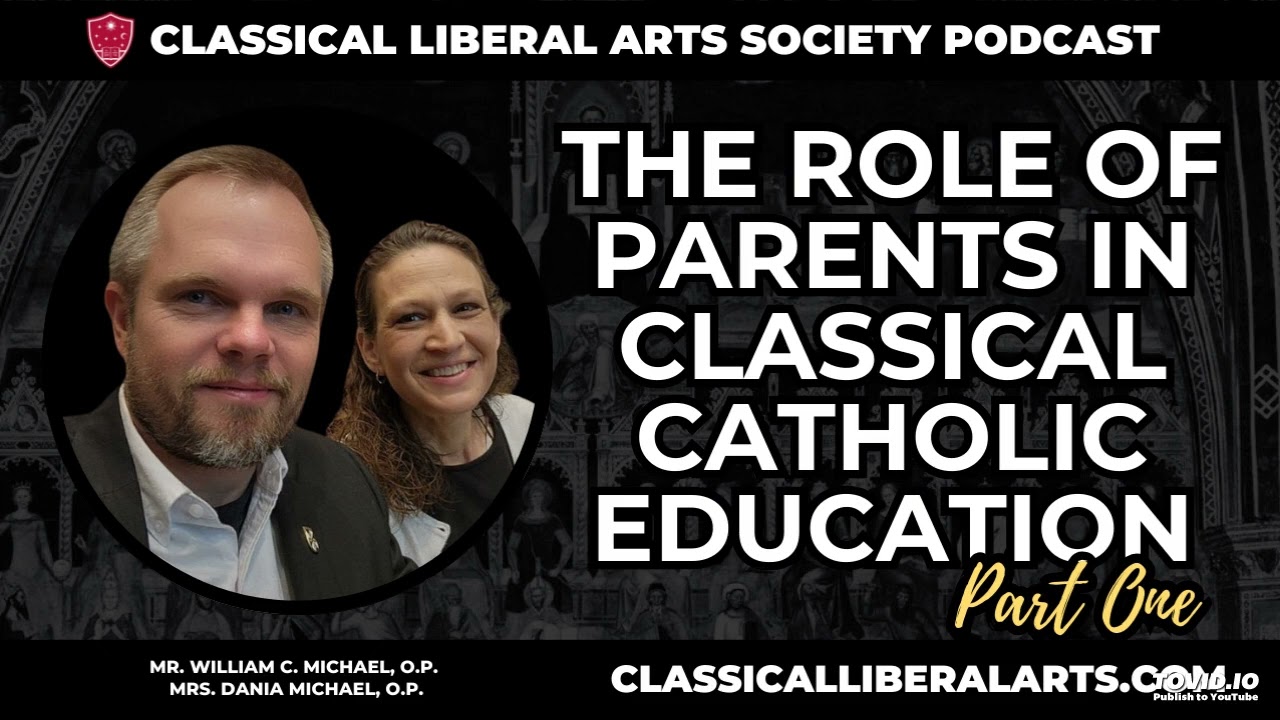
Today is Tuesday, November 26, and this is William Michael of the Classical Liberal Arts Academy. Being home for Thanksgiving break, I have some extra time to share talks. I’d like to take up some topics that require more time than I can normally afford. The main topic I’d like to discuss is the role of parents in classical Catholic education.
I want to get into the details about how parents—especially those with goodwill but without advanced education or knowledge of Classical Studies—can still provide their children with an education that many throughout history would have died for. I’ll explain principles, delve into practical details, and offer actionable methods. This isn’t a prepared talk, so I’ll proceed as orderly and efficiently as possible, aiming to be exhaustive and helpful for parents.
Locating Ourselves in Time
First, as parents, we need to locate ourselves in history. Cicero famously said, “If a man doesn’t know what happened before he was born, he remains forever a child.” To prepare our children for the future, we must understand where we stand in the progress of human experience, cultural development, and salvation history.
We live in the 21st century, where society is formally very different from the past. Practically, it may not be as different as it seems, but our systems of government, economy, and technology have evolved significantly. Modern technology has given us access to resources and tools that most Catholic parents in history could never have imagined.
It’s important to recognize these advantages. For example, we take for granted tools like text messaging, email, phone calls, and video chats, but these technologies have transformed our ability to communicate and educate. Yet, instead of leveraging these tools to achieve our goals more effectively, we often use them to do old-fashioned things faster, which misses their true potential.
The Obsolescence of Traditional Schooling
Sending children to school, for example, is an obsolete practice in 2024. Historically, schools were necessary because most parents lacked formal education, leisure time, and access to educational resources. Schools offered a centralized way to provide children with basic education.
Today, the situation is completely different. Most parents have at least a high school education, many have college degrees, and resources for homeschooling are abundant and affordable. With digital technology, we can access incredible libraries and teaching materials for little to no cost.
In light of these changes, the need for schools has diminished. The real reason schools persist is because they provide daycare, allowing parents to pursue careers and maintain suburban lifestyles. However, education itself no longer requires a school building or a professional teacher. Homeschooling allows parents to provide their children with the same, if not better, educational opportunities at home.
Rethinking Educational Goals
Homeschooling parents often boast about how they can complete all their work in just two or three hours a day. While this efficiency may seem impressive, it reflects a troubling mindset: many homeschoolers are simply replicating public school goals in a home setting.
Why are Christian parents serving public school goals at home? Public schooling is a welfare service designed for the poor, with minimum standards. It has nothing to do with the goals of a private, classical Catholic education. Instead of asking how quickly we can complete the minimum requirements, we should ask, “What should a classical Catholic education aim to achieve?”
Historically, education centered on the classical liberal arts, philosophy, theology, and the humanities. I recently gave a talk titled 21 Reasons for Classical Studies, which outlines the historical goals of classical Catholic education. I encourage you to review it to better understand what your homeschooling goals should be.
Providing the Right Environment
To homeschool effectively, parents must provide their children with an environment conducive to learning and Christian culture. This requires planning, effort, and sacrifice. It’s not enough to simply shield children from harmful influences; we must also create a positive, nurturing environment that fosters good character and intellectual growth.
Think of your home as a greenhouse. Just as young plants need special conditions to grow, young children need an environment that protects them from harm while actively promoting their growth. A homeschooling environment should have spaces for study, prayer, and play, designed to meet the needs of the entire family.
Fathers, in particular, have a critical role in providing for this environment. Many Christian men mistakenly believe that staying home and being directly involved in their children’s day-to-day activities is the best way to contribute. However, the truth is that their children and wives often need something more fundamental: financial stability and a well-planned home environment.
We live in a cash-based society where resources, services, and opportunities depend on financial provision. Fathers must take this responsibility seriously, working hard to provide their families with the tools and environment necessary for homeschooling success.
Practical Advice for Young Parents
If you’re a young parent just starting homeschooling, my advice is to focus on the practical aspects first. Instead of worrying about phonics lessons or early reading skills, think carefully about your home, resources, and finances. Ask yourself if your environment supports your educational goals. If not, your first priority should be improving that environment.
Education is a long-term project. You will be with your children for 15–20 years, so there’s plenty of time to build a solid foundation. Focus on creating a home that supports learning, fosters virtue, and reflects the principles of classical Catholic education.
Raising the Bar
Finally, we must raise the bar for homeschooling. Many parents are content with minimal standards, aiming only to meet the legal requirements of education. However, as Catholic parents, our goals should be much higher. We should aim to raise children who know, love, and serve God, equipped with the intellectual and moral virtues necessary to live as faithful Christians in the modern world.
This requires a commitment to self-sacrifice, prudence, and generosity. It’s not easy, but it is possible. With God’s grace and a clear vision, we can provide our children with an education that prepares them not just for success in this life, but for eternal life.
I’ll stop here for now and continue this discussion in future talks. If you find this challenging, I encourage you to stay with me. These principles may be difficult to hear, but they are realistic and achievable. I’m confident that, with effort and God’s help, we can fulfill our duties as Catholic parents.
God bless you.
