

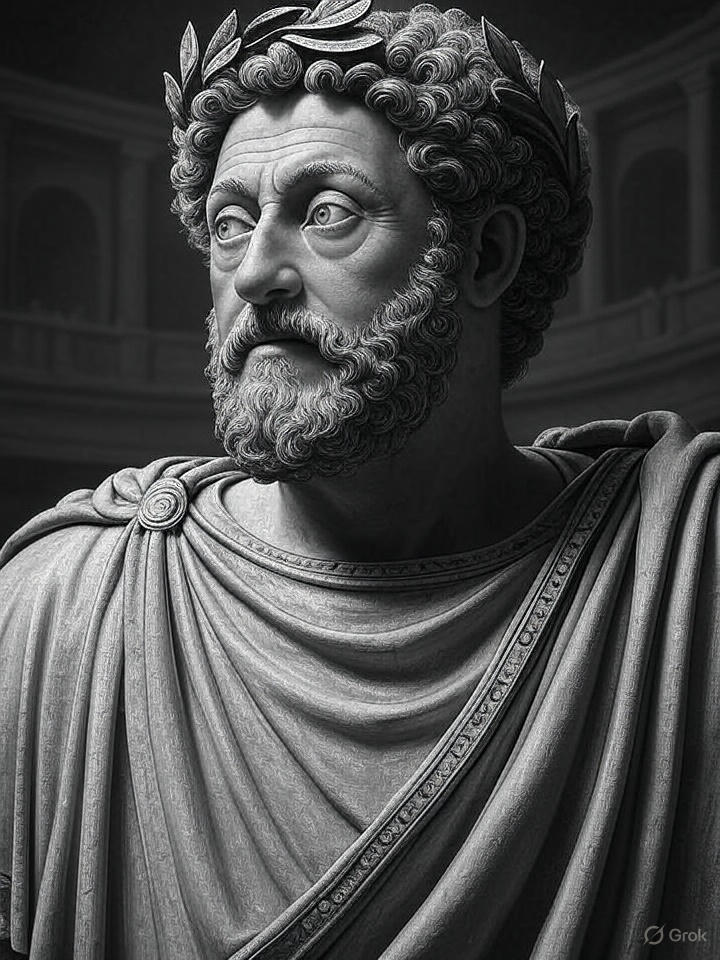
In times of social confusion and spiritual instability, many turn to ancient Stoicism in search of personal peace and direction. My own spiritual journey began with Stoic philosophy. The writings of Epictetus, Seneca, and Marcus Aurelius are rediscovered and quoted as if they offer a comprehensive philosophy of life. Their counsel is admirable in many respects and is better than any modern alternatives. Stoicism calls man to self-discipline, clarity of mind, and rational control of the passions. It reminds him that he is not a victim of fortune, and that true dignity lies in governing oneself according to reason. Marcus Aurelius urges, “The happiness of your life depends upon the quality of your thoughts,” and Epictetus teaches, “It’s not what happens to you, but how you react to it that matters.” These maxims offer a sense of strength in the face of suffering. But the soul of man was not made merely for temporary inner calm. It was made for eternal happiness.
The Stoic life is admirable, but it is ultimately insufficient. It represents the best that human reason and effort can achieve. But even at its perfection, it cannot fulfill the greatness of human desires. It cannot heal the wounds or overcome the effects of sin. It cannot offer an answer to the cause or benefit of death. The Catholic life, by contrast, is grounded not only in reason but in revelation, not only in human virtue but in divine grace. It fulfills all that is noble in Stoicism and leads man to the supernatural end for which he was created. As St. Thomas Aquinas writes, “Grace does not destroy nature, but perfects it” (Summa Theologica, I, q.1, a.8). While Stoicism may prevent evil, only Catholicism can produce good.
The Stoic understands something essential: that the man who is ruled by his passions is not free. Epictetus taught his students that man’s inner life is his only true possession. “Freedom is the only worthy goal in life. It is won by disregarding things that lie beyond our control.” The Stoic thus trains himself to detach from externals, to expect nothing, to desire little, and to remain calm in the face of fortune’s changes. Seneca writes, “He who is brave is free,” and “A man is as miserable as he thinks he is.” For the Stoic, suffering is a test of endurance and opportunity for self-possession. Marcus Aurelius reflects, “Choose not to be harmed—and you won’t feel harmed. Don’t feel harmed—and you haven’t been.”
This is a noble human response to the evils of life—but an insufficient one. The Stoic man is alone with his reason. He is his own lawgiver, physician, and judge. He relies only on his inner strength, and when it fails, he has nothing beyond himself. This, in the end, is not reasonable. The Christian, by contrast, acknowledges the frailty of fallen nature and seeks help from above. St. Augustine confesses, “My soul is like a house, small for You to enter, but I pray You to enlarge it.” (Confessions, I.5) He does not rely on his will alone, but opens his heart to divine grace. He seeks not impassibility, but sanctity. The Stoic silences desire. The Catholic pursues it beyond his own ability.
The difference begins in the view of man. For the Stoic, man is a rational being whose happiness depends on harmony with nature. “Live according to nature” was the central principle of Stoic ethics. But this concept of “nature” is limited to what unaided reason can observe. The Stoic fails to understand that man’s nature is wounded—that his reason is darkened, his will weakened, and his passions disordered due to sin. St. Thomas Aquinas writes, “The natural law can be blotted out in particular cases, by evil persuasions, vicious customs, and corrupt habits” (ST, I-II, q.94, a.6). The Christian sees more clearly, enlightened by divine revelation. He does not deny man’s nobility, but he also does not deny his need for redemption. Man is not simply in need of education. He is in need of salvation.
Here Stoicism fails terribly. It knows no Redeemer. It speaks of courage but not of mercy. It understands endurance but not grace. It teaches that man must stand tall through the trials of life—but offers no hope of the enjoyment of the good that is possible. The Stoic builds a wall around the soul to keep out pain. The Christian makes himself vulnerable, opening his soul to Christ, who heals it. St. John of the Cross explains, “The soul that is attached to anything, however much good there may be in it, will not arrive at the liberty of divine union.” But this detachment is not for stoic tranquility—it is for union with God.
Consider how the Stoic approaches suffering. Marcus Aurelius writes, “Accept whatever comes to you woven in the pattern of your destiny, for what could more aptly fit your needs?” The Stoic seeks to endure suffering with calm detachment. It has no purpose or end. The Christian, on the other hand, sees suffering through the light of the Cross. It is not merely something to bear. It is something to accept and offer for a redemptive purpose. St. Paul writes, “If we suffer with [Christ], we shall also be glorified with Him” (Romans 8:17). The Christian does not suppress sorrow. He unites it to Christ’s Passion and offers it to God as a spiritual sacrifice. St. Teresa of Avila, suffering in sickness and trials, once said, “Let nothing disturb you. Let nothing frighten you. All things are passing; God never changes.” This is not the indifference of the Stoic. It is the peace of a soul resting in God’s plan of salvation.
The Stoic fears the passions as threats to reason. Seneca counsels, “You must live for another if you would live for yourself.” But this noble sentiment is often buried beneath warnings against emotional entanglement. Love, grief, and desire are treated with suspicion. Marcus Aurelius warns, “Do not waste what remains of your life in speculating about your neighbors.” The Stoic ideal is detachment—even from those closest to us. For if affection can disturb our calm, it must be resisted or avoided.
The Catholic sees things differently. The passions are not evil in themselves. They are part of man’s created nature. They must be governed by reason, but not eliminated. They are to be perfected by grace. St. Thomas teaches, “Virtue does not suppress the passions, but perfects them” (ST, I-II, q.59, a.5). The saints were not cold and indifferent. They were moved by charity, which transcends thoughts of this life. St. Francis of Assisi wept over the sufferings of Christ. St. Catherine of Siena wrote letters with burning affection for the Church. The saints were filled with emotion, but it was sanctified and directed to its proper end. Love makes one vulnerable, but this vulnerability is not a weakness. It is vountary and, therefore, a sign of the highest strength. As St. Bernard of Clairvaux says, “Love seeks no cause beyond itself, no fruit; it is its own fruit, its own enjoyment.”
Nowhere is the contrast clearer than in their views of death. The Stoic prepares for death by rational acceptance. Epictetus writes, “Death is nothing terrible… if it were, Socrates would not have met it as he did.” Seneca, in his essays on death, speaks of suicide as a reasonable exit from life’s burdens. There is no sense of judgment, no hope for resurrection, no longing for heaven. Death is simply part of nature, to be faced calmly. This is contrary to reason, for reason in man is seen by Stoics as a divine quality, yet it is thought to have no origin or end beyond natural human life.
The Christian also prepares for death—but does so, reasonably, with hope of greater things. St. Paul declared, “For me, to live is Christ and to die is gain” (Philippians 1:21). St. Ignatius of Antioch, on his way to martyrdom, wrote, “Let me be food for the wild beasts, through whom I can reach God.” The saints did not merely endure death. They embraced death in this world as the beginning of eternal life. This, in light of human nature, is reasonable. The Stoic acceptance of death as the end of human nature is unreasonable.
The Stoic commits himself to self-mastery. But it is mastery by sheer will, a life of stubborn denial. His discipline begins and ends with his own effort. When he fails, he is left to start again with no aid but his own resolve. There is no reparation for his failures, which fails to satisfy the reasonable demands of justice. There is no contrition, forgiveness, reconciliation, infusion of strength. The Christian, however, has answers to these problems. God makes possible the reparation of every evil. The Christian can fall seventy times and rise seventy times by the mercy of God. “The Lord is close to the brokenhearted,” says the Psalmist, “and saves those who are crushed in spirit” (Psalm 34:18). In Stoicism, failure leads to shame and must simply be ignored. In Christianity, failure reinforces the need for humility and grace.
Even in matters of social engagement, the difference is stark. The Stoic ideal is self-contained. Marcus Aurelius writes, “Retire into yourself. The rational principle which rules you is nevertheless not injured by the stirrings of the flesh.” The wise man retreats to his own mind for peace. The Christian is not self-contained. Reason teaches that man is a “social animal”, intended for cooperation with other men. He is a member of a Body. He is bound to others in the communion of saints. He is responsible for his neighbor. He must feed the hungry, clothe the naked, and forgive those who wrong him. The Christian is not called to ignore the evils around him, but to overcome them with good.
Finally, Stoicism offers no future. It ends in death. The Stoic strives for peace in this life because it’s all his philosophy has to offer. As Epictetus says, “What is death? A scaring mask. Turn it about, and see what it is.” There is no divine reward, no final justice, no eternal happiness. There is simply the dissolution of the self into the nothingness which he calls “god”.
The Catholic, by contrast, is promised the resurrection of the body and life everlasting. This is not a mere promise in words, but a reality demonstrated by the resurrection of Christ. The Christian lives in time, but looks ahead to eternity. He knows that every act of virtue, every hidden sacrifice, every cup of cold water given in Christ’s name has eternal consequence. St. Gregory the Great teaches, “What is here sown in tears, shall hereafter be reaped in joy.” The Christian neither accepts the evils of this life as his lot, not settles for the best this world can offer, but awaits a better life. In the meantime, he lives not with selfish stoic detachment, but with selfless Christian hope.
In every respect, the Catholic life surpasses the Stoic life. It includes all that is noble in Stoicism—reason, discipline, courage—but elevates these with more reasonable conclusions. It does not silence human longings, but satisifies them. It does not deny the significance of death, but overcomes it. The Stoic life, in the end, is found to not satisfy the demands of reason. Only the Catholic life provides for the perfection and fulfillment of human potential.
Mr. William C. Michael, O.P.
Headmaster
Classical Liberal Arts Academy
