
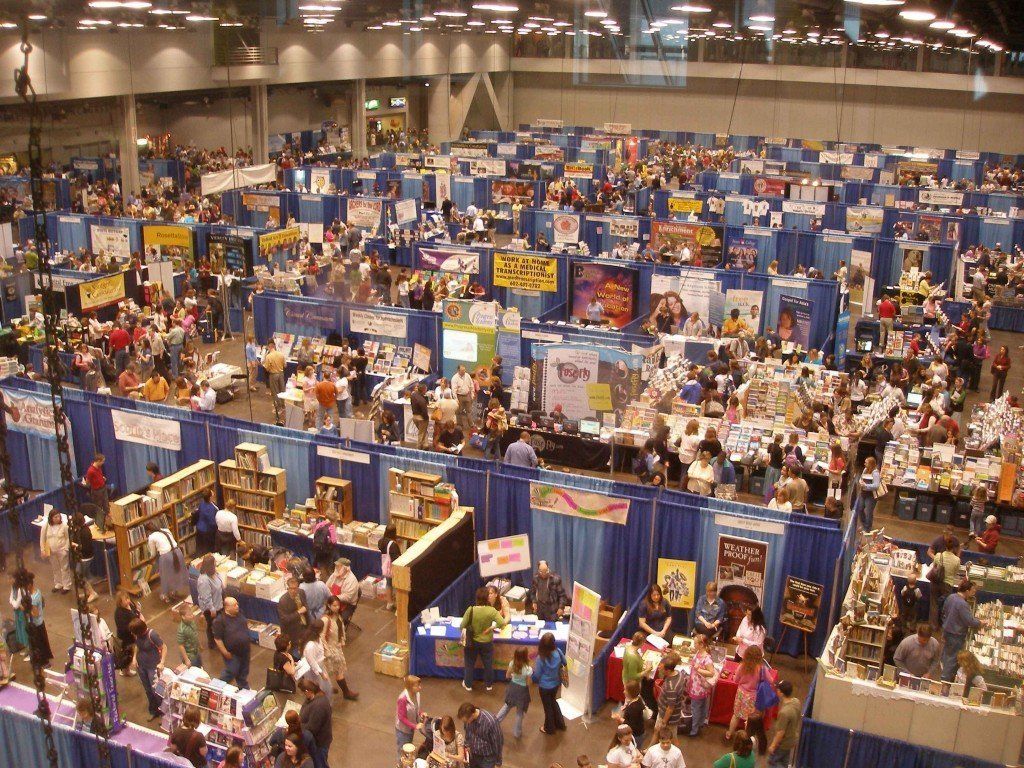
The modern homeschool market has always been embarassing to me as a Christian. I understand that the intentions are good, but the idea of having every parent become a curriculum designer reveals the great ignorance in Christian circles and lack of respect for the real work of Christian education.
In most places, “curriculum” has come to mean either (a) a brand of homeschool supplies, or (b) a collection of books a parent has decided to purchase for the coming school year—neither of which has anything to do with the word “curriculum”.
A curriculum is a course of studies that leads a student to a predetermined goal. To have a curriculum, one must have a predetermined goal and one must know how to reach that goal. Most homeschool parents have neither a proper goal for their children’s education nor a knowledge of how to reach a goal worthy of true Catholic education.
The modern homeschool craziness has little do with Catholic education, and much more to do with modern democratic arrogance. The idea that individuals know what is best for governments, laws, businesses or education, simply because they have the freedom to vote or buy whatever they like is crazy.
Catholic education has a very clear goal. In the Ratio Studiorum of the Jesuit order, it was written in 1599:
“The aim of our educational program is to lead men to the knowledge and love of our Creator and Redeemer.”
The obvious relation of this goal to the curriculum of the order’s schools was stated in the very next line:
“The provincial should therefore make every effort to ensure that the various curricula in our schools produce the results which our vocation demands of us.”
We see clearly that the Jesuits had both a goal for Catholic education, and a knowledge of how to pursue that goal, through a specific course of study. The Ratio Studiorum laid out the details of that course of study.
If we were to press homeschooling parents for an articulation of the goal of their children’s education, would they be able to articulate the goal clearly as the Jesuits could? Probably not, but some might. Giving them the benefit of the doubt, would they be able to then explain how students are to be led to the fulfillment of that goal? No.
This is not, of course, something that homeschool parents should be expected to do. Moreover, this is not something that homeschool parents should imagine that they can do. The arrogance that leads homeschool parents to assume themselves to be curriculum evaluators because they have registered as homeschool parents is where the embarrassing craziness comes from in the homeschool market. Publishers eager to sell whatever they can cram into a catalog promote this, but any responsible Catholic educators, hoping to pursue the true goal of Catholic education, have a mess to deal with before any real education can begin.
Curriculum discussions do not begin with what phonics, handwriting, spelling or arithmetic program you’ll be using. Curriculum discussions begin with the identification of objectives that must be achieved to reach the goal of Catholic education. Most homeschooling parents have absolutely no clue what such objectives might be, but start buying whatever the most attractive homeschool catalogs are selling, or what other homeschool families are using.
The question I asked in 2008, as my wife and I considered homeschooling our children, was, “Why don’t Catholic families do what wise Catholic educators of the past—including many saints—said to do? Why are they buying all of this homeschool junk?
The shallow homeschool curriculum questions never end. Parents don’t care to learn about the principles or history of the educational program we offer. They ask what Math curriculum we use, what we do for spelling, etc. They enroll and focus on Math and Science classes, ignoring the classical liberal arts in the Classical Liberal Arts Academy. They don’t care about Philosophy or Theology.
For Catholic education to improve, we have to move beyond this ignorant homeschool book-shopping culture and get to real education under the direction of wise men and saints. We can do this in the Classical Liberal Arts Academy.
Mr. William C. Michael, O.P.
