
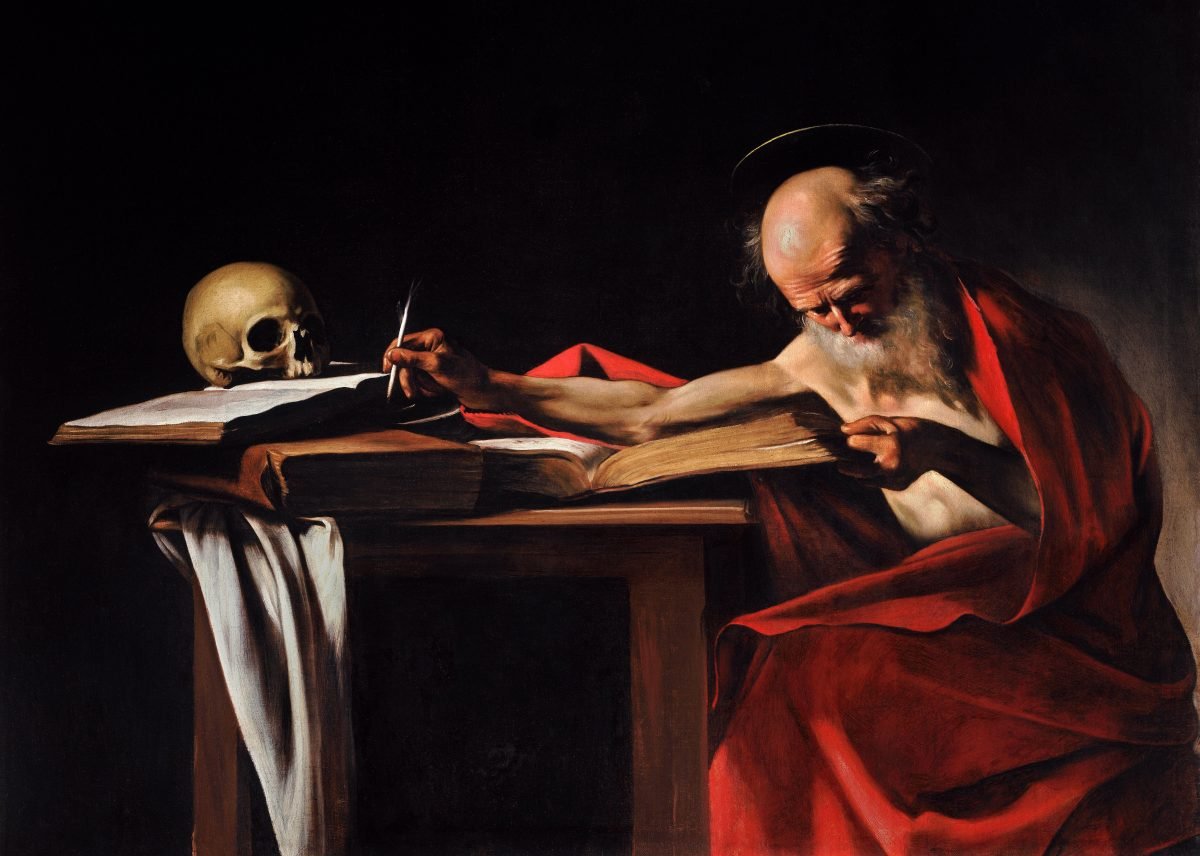
The Catholic tradition has long expressed the harmony of grace and nature in the simple yet profound phrase: gratia perficit naturam—grace perfects nature. This principle, drawn from the teaching of St. Thomas Aquinas and rooted in the wisdom of the Fathers, explains not only the relationship between God and man but also the proper understanding of human study, labor, and growth. It reminds us that man’s natural powers are real, good, and ordered to truth, yet also limited and insufficient for attaining his supernatural end. God does not despise the natural capacities He has given to man but calls man to develop them with diligence, so that divine grace may elevate them to their true fulfillment. The error of many Catholics today is to imagine that grace excuses them from the hard work of study and the pursuit of prudence, as if prayer alone should yield instant wisdom. But the Catholic tradition teaches that God often leaves us to the work of seeking prudence, since prudence is a virtue that must be formed by reason, experience, and effort. Grace strengthens and perfects this effort, but it does not replace it. The truth of this principle shines especially in the work of classical Catholic studies, where intellectual discipline is joined with faith, and the human search for wisdom is raised into participation with the wisdom of God.
“Those who gain [Wisdom] win the friendship of God,
Wisdom 7
to whom the gifts they have from discipline commend them.”
The phrase grace perfects nature presumes that nature itself is good. God created man with an intellect capable of reasoning and with a will ordered toward the good. Man is not an empty vessel waiting passively for divine inspiration, nor a creature meant to ignore his own faculties in pursuit of blind dependence. Rather, man is created in the image of God, capable of understanding, of deliberate choice, of speech, and of art. To despise these powers is to despise the handiwork of God Himself. When Catholics neglect study and reason, hoping that prayer alone will provide answers, they distort the divine order. Grace comes to heal, elevate, and complete human powers, not to abolish them. As St. Thomas teaches, nature is like the wood, and grace is like the craftsman who shapes it into a fine work. Without the wood, nothing can be fashioned; without the craftsman, the wood remains unfinished. Both are necessary. The Catholic life therefore requires us to exercise our reason to its full capacity, training our minds in the disciplines that lead to prudence, and then to allow grace to raise this prudence to supernatural wisdom.
This teaching is nowhere more important than in the cultivation of the virtue of prudence. Prudence is the habit by which a man discerns the right means to achieve the right end. It is not infused in its entirety by grace, nor is it granted through pious wishes alone. Prudence must be learned. It grows through reflection, through the weighing of past experiences, through the comparison of principles, through the testing of judgments. The man who neglects study can never be prudent, for prudence requires knowledge. Grace may dispose a man to seek wisdom, may open his heart to truth, may protect him from obstinacy, but grace will not erase the need for study. A student who neglects his books, who prays for wisdom while refusing to learn, is not pious but presumptuous. God has given him the means to grow in prudence and expects him to use them. When the Catholic kneels in prayer, begging for guidance, God often answers by recalling him to his duties of study, reflection, and counsel. It is through these natural efforts, perfected by grace, that prudence is formed.
In the modern world, this truth is often forgotten. Many Christians fall into the error of quietism, imagining that the Christian life is purely passive, that grace alone will carry them without any exertion of study or discipline. Others fall into a sentimentalism that confuses the stirrings of emotion with the guidance of God. They ask for signs and consolations rather than seek to form their judgment by careful reasoning. Yet the Catholic tradition calls us to a nobler path. The Fathers and Doctors of the Church were men of tireless study. St. Augustine wrestled with the works of Plato and Cicero, St. Thomas immersed himself in Aristotle, St. Jerome labored to master Hebrew and Greek. Their sanctity did not excuse them from study; their sanctity demanded it. Grace inspired them to devote their energies to learning so that their reason might be perfected. The Catholic intellectual tradition is living proof of the principle that grace perfects nature, never bypassing or replacing it. Note how the grace of God and human labor are present together in the following quote from Pope Sixtus V:
“By the divine favor of Him who alone gives the spirit of science, wisdom, and understanding, and enriches His Church with new blessings and strengthens it with safeguards, [Scholastic theology] was founded by the angelic St. Thomas and the seraphic St. Bonaventure…by unwearied diligence, and at the cost of long labors and vigils, set in order and beautified, and when skilfuly arranged and clearly explained in a variety of ways, handed down to posterity.”
Pope Sixtus V
Quoted by Pope St. Leo XIII in “Aeterni Patris” (1879)
Classical Catholic studies embody this harmony. The curriculum of the liberal arts, inherited from antiquity and sanctified by the Church, provides the natural foundation for intellectual growth. Grammar, logic, rhetoric, arithmetic, geometry, music, and astronomy are not supernatural subjects. They are the works of human reason, discovered by the Greeks and Romans through their natural powers. Yet the Church preserved them, refined them, and placed them at the service of theology. The liberal arts train the mind to reason, to observe order, to discipline memory, to weigh arguments, and to seek harmony. They are the natural wood out of which the temple of divine wisdom may be fashioned. Grace, working upon the student of the liberal arts, raises these arts into instruments of sacred learning. A Catholic who studies logic does not merely sharpen his reasoning; by grace he learns to defend the faith. A Catholic who studies rhetoric does not merely practice eloquence; by grace he learns to preach the Gospel with clarity. A Catholic who studies astronomy does not merely trace the heavens; by grace he learns to see the glory of the Creator. The arts are perfected by grace, but they must first be possessed by nature.
In the Classical Liberal Arts Academy, this principle guides the entire program. Students are not encouraged to pray instead of study, nor to imagine that sanctity excuses ignorance. Rather, they are taught that to neglect study is to neglect one’s duty. God gave man a mind to cultivate, and education is the means by which it is cultivated. When a student resists the discipline of memorization or logic, when he claims that “God will guide me” without putting in the labor, he is misunderstanding grace. God will guide him by granting light to his reason as he studies, by giving patience to his will as he struggles, by raising his mind from mere human knowledge to participation in divine wisdom. But the effort must be made. As the farmer must till and plant before he prays for rain, so the student must study before he prays for understanding. Prayer and grace are not excuses for laziness; they are the strength that perfects labor.
The harmony of grace and nature also safeguards Catholic learning from two extremes. On one side is the rationalism that exalts human reason as sufficient for all truth. This is the error of modern philosophy, which seeks to build a world of science and politics without reference to God. On the other side is the fideism that despises reason, claiming that only faith is needed, and that study is vain. Both errors sever what God has joined. Reason alone falls into error and pride; faith alone without reason falls into superstition and ignorance. The Catholic path is the union of both. Reason is cultivated by study, so that faith may elevate it; faith inspires reason, so that study may be fruitful. In the CLAA, students are led away from both extremes, trained to use reason with discipline while also submitting their reason to the light of grace.
The daily work of Catholic study exemplifies this principle in practice. Consider a student learning Aristotle’s logic. He must grapple with definitions, categories, syllogisms. These require attention, repetition, and careful reasoning. There is nothing mystical about memorizing the figures of the syllogism. It is natural work. Yet grace assists the student to persevere, to love truth, to avoid despair when difficulties arise. Later, when this same student turns to theology, his training in logic becomes an instrument perfected by grace, allowing him to weigh arguments, to avoid fallacies, to defend doctrine with precision. Or consider a student translating Latin. The labor of vocabulary drills and syntax exercises is natural. Yet grace inflames charity, so that the student may love the words of Scripture and the Fathers, which his Latin now allows him to read. The study was natural; the fruit is supernatural. Grace perfects the nature of study, but does not replace it.
It is also important to note that God often withholds direct guidance in order that man may grow in prudence. A man who prays for answers may be left without a clear sign, not because God is absent, but because God wills that the man exercise his reason. If every decision were revealed by divine command, man would never mature in prudence. He would remain a child, dependent on signs, incapable of judgment. God wills that man become a mature son, capable of discerning good from evil through the habit of prudence. Thus, God leaves us to wrestle with questions, to study, to deliberate, to seek counsel. This is not abandonment but fatherly love. Just as a father allows his son to make choices and learn from them, so God allows man to grow in prudence through effort. Grace assists, but does not eliminate the process.
The neglect of this truth has serious consequences in Catholic education. Many students are trained to rely on feelings, on supposed inspirations, or on devotional shortcuts, rather than on disciplined study. They may grow pious in sentiment but remain ignorant in judgment. Such Catholics are easily led astray by false teachers, emotional movements, or superstitious practices. Prudence is absent because reason has not been trained. The CLAA exists to remedy this by restoring the classical curriculum, which forms reason itself. By mastering the liberal arts, by studying the philosophers and Fathers, students are equipped to think clearly, to weigh truth, and to resist error. Grace then perfects this training, making prudence not only a natural virtue but a supernatural one, directing the soul toward eternal life.
The union of grace and nature also explains the need for perseverance in study. Many students grow impatient, wanting instant wisdom. They pray for knowledge but resist the years of labor required to gain it. Yet God’s design is gradual. Just as a seed grows into a tree over years, so knowledge grows into wisdom by steady cultivation. Grace does not replace time; it sanctifies it. A student of the CLAA may labor over Latin declensions for months, wondering if progress is being made. Yet grace perfects that labor, weaving patience, humility, and discipline into the soul. Over time, the fruit appears. The same is true of philosophy and theology. Wisdom cannot be rushed. It requires the natural process of study, perfected by grace.
In the end, the principle that grace perfects nature reveals the dignity of human effort. Study, reasoning, memorization, discipline—these are not wasted motions but the very matter that grace will perfect. To neglect them is to reject God’s order. To embrace them is to cooperate with God’s design. In the Classical Liberal Arts Academy, this principle is lived daily. Students are reminded that their prayers for wisdom must be joined with labor, that their pursuit of holiness must be joined with study, and that their natural faculties must be exercised if grace is to elevate them. Thus, classical Catholic studies become not merely an academic pursuit but a path of sanctification. The natural is cultivated; the supernatural is given. Man labors; God crowns the labor. Grace perfects nature.
Mr. William C. Michael, O.P.
Headmaster
Classical Liberal Arts Academy
