
Living in the information age, we imagine that we are well-informed. The problem we have however is that our information is popular and shallow. We know very little about many subjects. Moreover, the quality or certainty of the information we know is very poor; much of it is opinion, rumor or theory. Much of what we think and say is uncertain at best. The subjects we know about are the subjects of the local newspaper, not the subjects of real education and culture.
If we were to move back in history beyond the advent of the internet, television and radio, we would find that people didn’t have the kind of knowledge most people have today. Women attended to their daily homemaking, men attended to their daily occupations. Men in learned professions did the studying. The knowledge of the educated class was often not even available in the language of the common people. It was very clear who was “literate ” and who was not. Among the educated, mastery of a timeless body of general knowledge could be assumed. This was true into the 20th century.
Today, real learning is obscured by information, most of which is useless, idle information. For us to get a real education, we must move beyond Youtube and social media and immerse ourselves in real study.
My channel on You Tube just reached 5,000 subscribers. I receive messages daily from listeners who tell me the talks are helpful. I publish the talks to introduce men and women to ideas that are, unfortunately, uncommon today. I invite them to real study. Most of the listeners ignore what I actually say and seek more talks and videos. The problem with this is that as long as we go on listening to these talks and watching videos, we are not studying. We may be consuming interesting content, but it is shallow content. It is not real learning.
The danger of the information age is that it allows many men to imagine that they are engaging in intellectual activity, when they are actually just gossiping. The depth of the content they are engaged in is the same as men might have discussed at the pub in an old working village, or around the water cooler in a modern office. It is not real learning.
In the Classical Liberal Arts Academy, I have assembled a complete system of real learning. In the Academy, one can learn the classical languages, study the seven liberal arts, learn classical philosophy, study Catholic Theology, read world history, study history’s finest literature, and much more. To do so, however, one will need to move beyond podcasts and videos. One will have to learn to read—not for a few minutes, like reading a newspaper or magazine article, but for hours and days and years, to move beyond the surface into real learning—the knowledge of history’s wisest and best men.
To put it simply, if you’re watching videos, or chatting on social media, no matter the topic, you’re not learning, You may be collecting new information, but it’s not the knowledge of wise men.
Real learning is not a matter of information, but mastery of arts and sciences. By “arts” are meant the practical subjects that are known to be the instruments of real learning—the seven liberal arts. By “sciences” are meant the organized systems of learning gathered by men who had mastered and employed the use of those instruments. The arts referred to include grammar, logic, rhetoric, arithmetic, geometry, music and astronomy; the sciences referred to include the philosophical and theological treatises of Aristotle, Cicero, Thomas Aquinas, and other wise men. These arts and sciences alone constitute “real learning”.
When I speak of the writings of past generations, many will ask, “But what of all of the discoveries of modern men?” This modern knowledge is greatly overrated—and that’s not just my opinion.
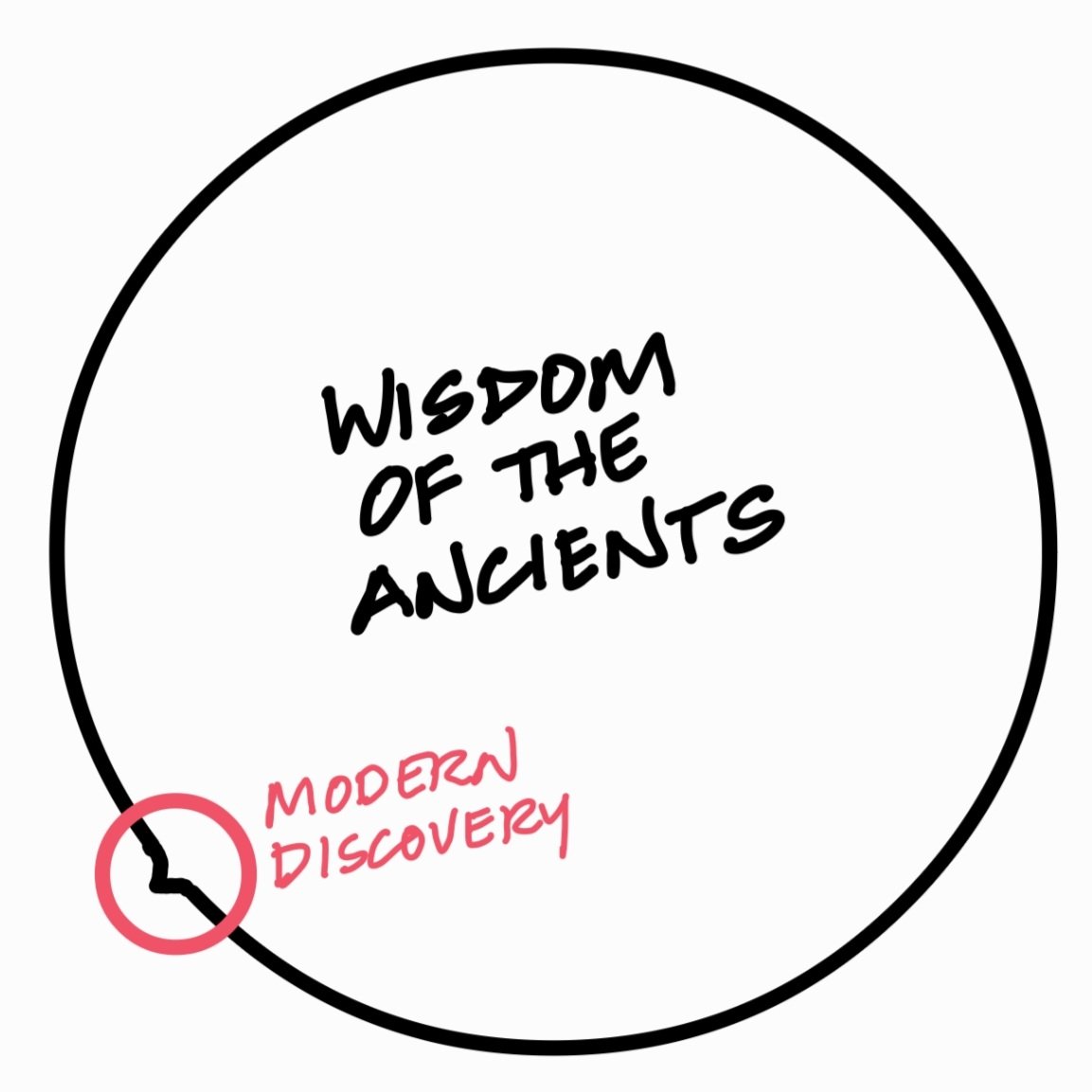
A professor of mine at Harvard once explained with an illustration the nature of modern academic learning. He drew a large circle on the board and said that the circle represents all human learning, the knowledge of the human race. He then explained that when scholars advance in their learning, they move towards a very small point near the edge of that circle. Thin learning concentrates more and more on one specific point on the edge of that circle and the results of their study, experimentation, etc., if influential at all, causes the edge of that circle of human learning to extend further at just that one point—in a microscopic distance. As men study in all different subjects, in all areas of learning, the whole circle can continue to expand in all directions, and human knowledge can grow, little by little.
The point of this illustration was to show that our academic work is of little significance and that scholars should always be humble and avoid overestimating the significance of their academic work.
There is, however, great significance in this illustration for our studies. The knowledge of the ancients was not a small portion of the circle of human knowledge, as many suggest today. Rather, it supplied the bulk of the circle. The achievements of modern scholars have contributed very little. That is not to say that these contributions are worthless, but they are not great. Moreover, much of what is called “modern learning” is only hypothetical, and is uncertain.
Therefore, those who neglect the study of ancient learning are ignorant of the mass of human learning. Those who boast of studying only the latest writers, on modern subjects, learn only bits and pieces of the fringes of human knowledge, and they do so at great cost. It is a terribly inefficient approach to learning. To learn so little of so much, at so great a cost is, ultimately, imprudent. It is much wiser to study the arts and sciences of the ancients, which provide the bulk of the circle.
For all of history, this is how education was understood. Little, if any, time was given to the uncertain outer fringes of learning. The same core of knowledge was pursued in schools for almost all of history, and certainly of Christian history.
It is this core mass of human learning that is neglected in modern schools—and in modern adult life. Men boast of reading the latest book from the leading scholar, not realizing how insignificant this is. They argue over the different theories at the edge of the circle, while being ignorant of most of the content of the circle itself. We find that their modern academic controversies are often not driven by knowledge but by the practical implications of them and the desires of those who promote them.
“All the Athenians, and strangers that were there, employed themselves in nothing else, but either in telling or in hearing some new thing.”
Acts 17:21 DRA
This is not the kind of learning that wise men seek. This is not the kind knowledge that good men desire.
In the Classical Liberal Arts Academy, we don’t study the latest books by the leading scholars today. We study the ancient arts and sciences, which address the most fundamental concerns in human life, and provide the bulk of what may be called human knowledge. This is the learning that wise and good men desire.
When we understand this, we learn that there are many benefits to students in this learning. First, most of the sources for study are in the public domain and are easily accessible. The latest editions of modern books, on the other hand, which offer us very little, are most expensive. Moreover, while the largely theoretical work of modern scholarship is often the work of ungodly men, and mixed with great errors, the work of ancient men is often that of wise men and saints.
Ancient learning is better in every way.
However, to pursue the wisdom of the ancients, we will have to abandon the podcasts, Youtube videos and social media because this knowledge isn’t there. We’re going to have to read the writings of the wise themselves.
“The words of the wise are as goads, and as nails deeply fastened in, which by the counsel of masters are given from one shepherd. More than these, my son, require not. Of making many books there is no end.”
Ecclesiastes 12:11-12 DRA
Mr. William C. Michael, O.P.
Headmaster
Classical Liberal Arts Academy
Enjoy this article? Take a moment and share it with friends.
Note: Thanks to Adele Botti for help with proofreading.
