

On Saturday, I enjoyed the privilege of attending the annual retreat for our Lay Dominican chapter in the Charlotte diocese. While there, a friend who works in Catholic education, asked me:
“What’s the real difference between classical education as you promote it, versus other “classical education” programs?”
I answered, “Easy. The answer is found in the first verse of Proverbs 9: ‘Wisdom has built her house, she has set up her seven columns.‘.”
When I quoted that verse, he looked at me, waiting for an explanation. So, I went on.
“St. Albert the Great, speaking on that verse, explained, “Wisdom hath built herself a house, she hath hewn her out seven pillars. This house is the Blessed Virgin; the seven pillars are the seven liberal arts.”
For St. Albert (1200-1280), in that verse, wise Solomon identified the true path to Wisdom–the system of education acknowledged by the Holy Spirit. That system of education was the one and only system of true education in history: the classical liberal arts curriculum.
For modern readers, that verse is meaningless. For Catholics of past generations, it was central to Catholic culture.
In 1180, a book titled the “Hortus Deliciarum” (Garden of Delights) was composed by Herrad of Landsberg. In that book was a painting titled “Philosophia et Septem Artes Liberales” (Philosophy and the Seven Liberal Arts). Here is the painting, which you my recognize:

In the painting, we we lady Wisdom at the center, with the name Philosophia. She is sitting in her house, and if we look about her we find seven pillars. Standing among the seven pillars are images representing the seven liberal arts: Grammatica, Rhetorica, Dialectica, Musica, Arithmetica, Geometria and Astronomia. These names should be easy to translate and understand.
This image is nothing more than an illustration of Proverbs 9:1: “Wisdom has built her house, she has set up her seven columns.” It’s worth noting that the meaning of this passage was understood in 1180, almost a century before St. Albert was born.
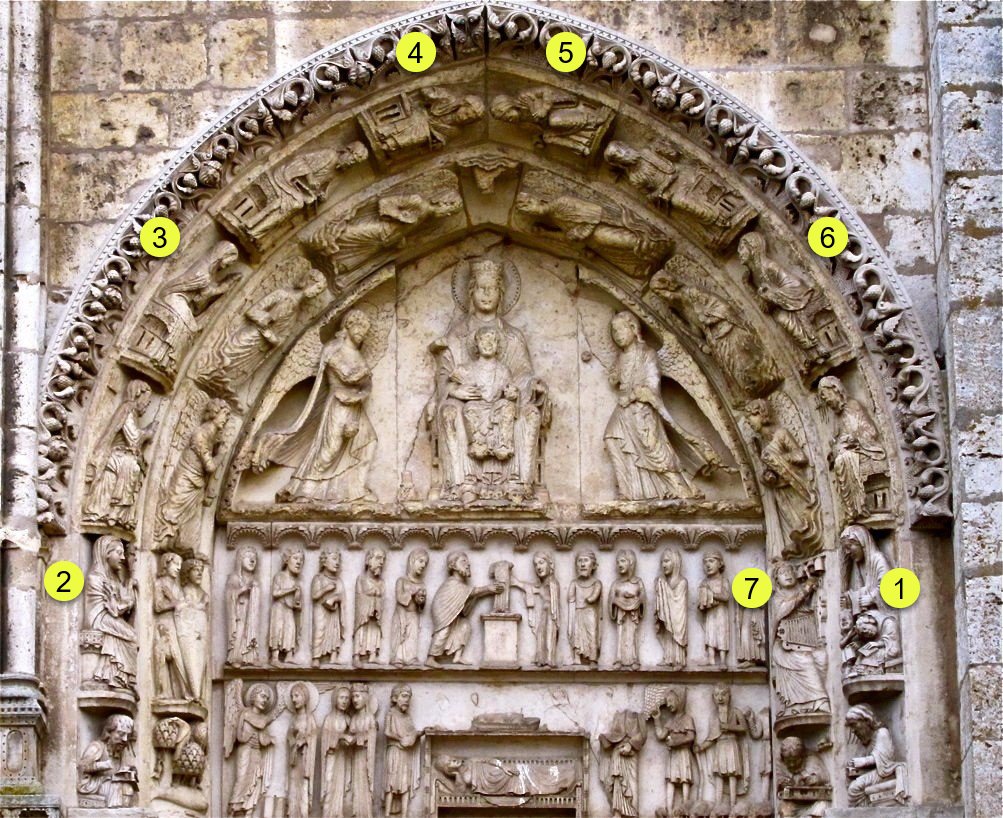
Around the same time that the image above was painted, the stunning Cathedral of Chartres was constructed, and not without recognition of the one and only system of education. On the west end of the Cathedral, the seven liberal arts were carved into the arch surrounding the door((See: https://crisismagazine.com/opinion/convergence-to-the-source-christianity-and-liberal-arts-in-the-university)):
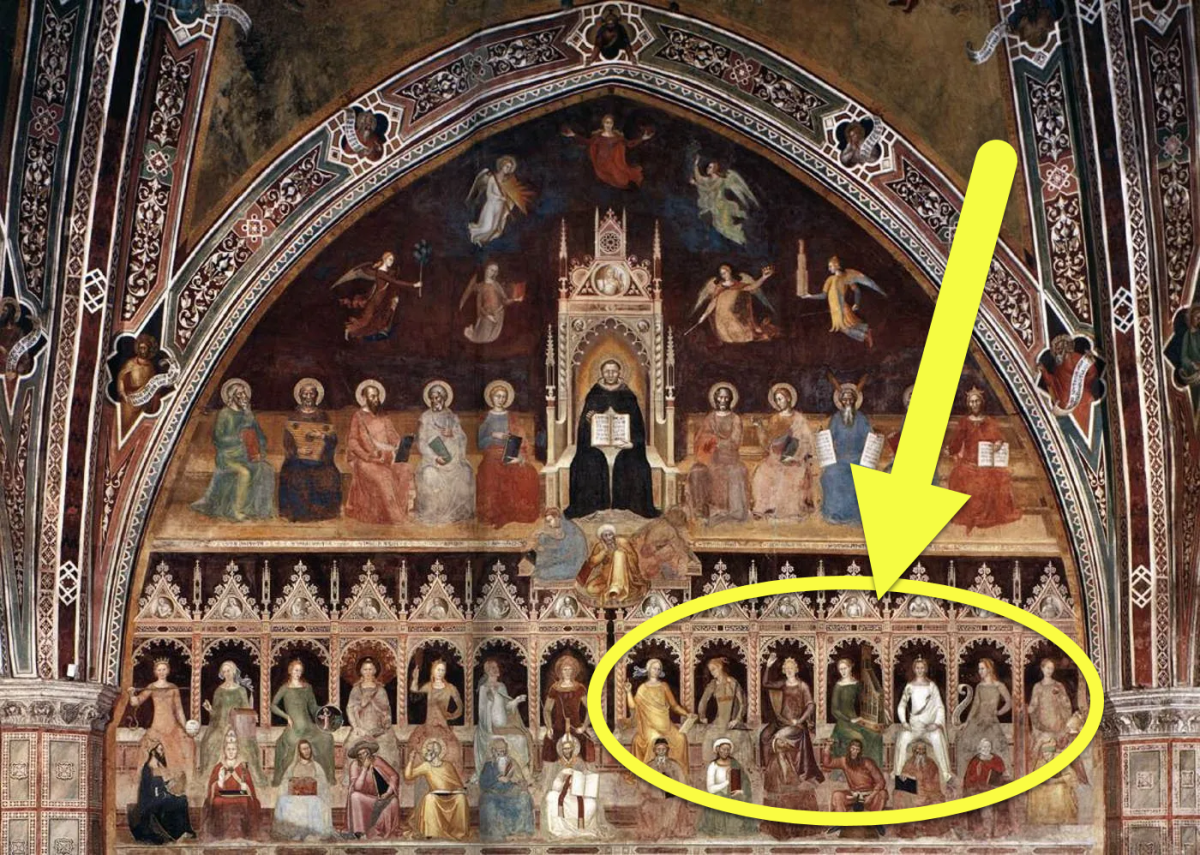
We can find the seven liberal arts depicted in many medieval art works, but most importantly in the famous “Triumph of St. Thomas Aquinas” by Andrew da Firenze, around 1370–a century after the death of St. Albert.((Source: https://www.wga.hu/html_m/a/andrea/firenze/spanish/3west.html))
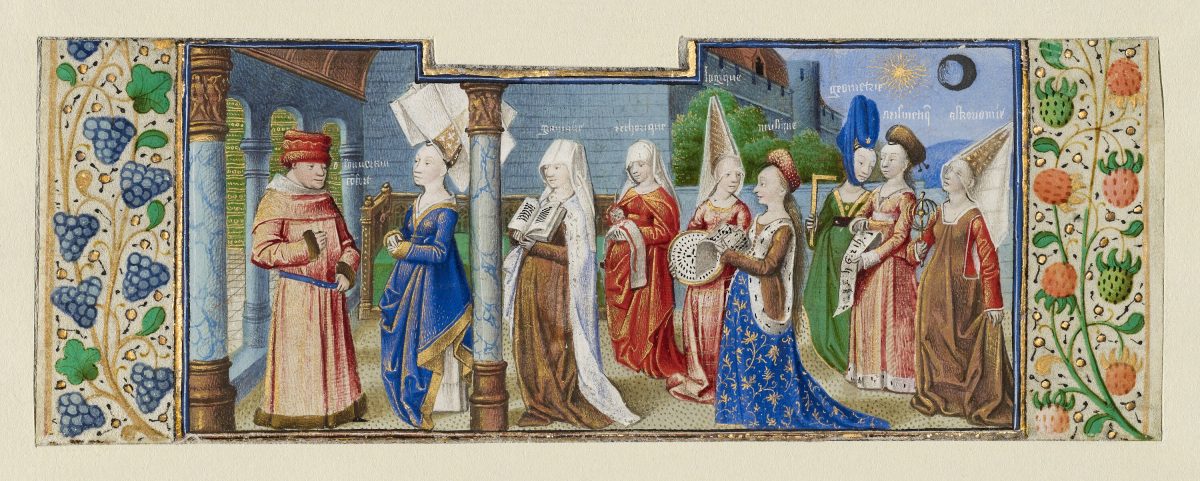
In the image below, painted around 1480, we see the Christian philosopher Boethius (left) being introduced to the seven liberal arts by “Philosophy”((Source: https://www.getty.edu/art/collection/object/108F61)).
Many more examples can be provided, but you are invited to browse through them with a Google search.
The simple point is this: from the 11th century, we have evidence that the seven liberal arts were understood to be the system of studies necessary for the pursuit of Wisdom. In short, they were the subjects of the Christian curriculum.
This is what we refer to as “real” classical education: the system of the seven liberal arts spoken of in the book of Proverbs.
Now, if we wish to consider what I refer to as “fake” classical education, it’s the modern school fad that seeks to add to the modern K-12 curriculum superficial studies in Latin, history and the “Great Books”–none of which has anything to do with historical Christian education.
That’s the difference. As I said, it’s very simple.
Mr. William C. Michael, O.P.
Headmaster
Classical Liberal Arts Academy
Enjoy this article? Take a moment and share it with friends.
