
Good Works.
The unfortunate result of the debate between Protestants and Catholics regarding the nature of good works is that Christian works have been compartmentalized and thus left mostly undone in our age. The daily work of Christians is reduced to mere faith – even if one accepts the Catholic doctrine of the merit of works, they are understood to be something done by clerics, or nuns, or extraordinary people like saints.
But this was never the understanding of Christian works in history. Rather, Christians have always understood good works to be essential, central, and necessary to one’s lived experience of salvation. This was so from Apostolic teaching, where St. James in his New Testament letter explains:
“Was not Abraham our father justified by works when he offered his son Isaac upon the altar? You see that faith was active along with his works, and faith was completed by the works. Thus the scripture was fulfilled that says, “Abraham believed God, and it was credited to him as righteousness,” and he was called “the friend of God.” See how a person is justified by works and not by faith alone.”1
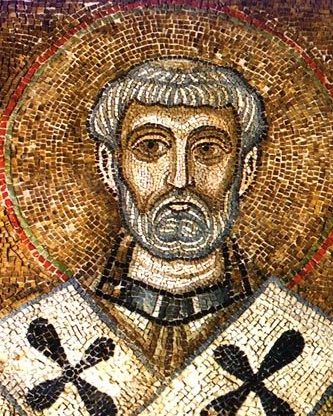
St. Clement of Rome was the fourth Pope at the end of the first century. He takes up this theme in his letter to the Corinthians. We read there his exhortation to good works and find once again that Christians understood good works to be necessary:
“What shall we do, then, brethren? Shall we be slothful in well-doing and cease from love? May the Master forbid that this should happen, at least to us, but let us be zealous to accomplish every good deed with energy and readiness.”2 (emphasis mine)
Do we have this kind of zealousness for every good work? Or, rather, do we accept a more passive kind of Christian life wherein we relegate such zealousness to other Christians, or worse, to unbelievers? St. Clement goes on to speak of the great works of God in Creation as the pattern for our own necessary Christian work as he exhorts, “let us follow his will without delay, let us work the work of righteousness with all our strength.”3 Have you or I any strength with which we direct ungodly or neutral works? Of course. This is our daily life! We fill our days with such works. Where is our zeal for the work of righteousness? Clement continues:
“…the lazy and careless cannot look his employer in the face. Therefore we must be prompt in well-doing: for all things are from him. For he warns us: ‘Behold the Lord cometh, and his reward is before his face, to pay to each according to his work.” He exhorts us therefore if we believe in him with our whole heart not to be lazy or careless ‘in every good work.'”4
Can we see how these ideas from the New Testament Scriptures and the first Christian bishops are nothing like the spirit of modern Christianity, infected as it were with Protestant compartmentalizing of good works? This is not a debate about the doctrines of Protestantism and Catholicism – that debate is largely settled. Rather, this is a demonstration that in practice, the Catholic teaching is what is present in the exhortations of the Scriptures and the Church Fathers. Good works are the work of Christians. It is what Christians do, and that with zealousness and all strength, knowing that we cannot look our employer, God as it were, in the face having spent a day “at work” having done really nothing at all. Can we really expect payment after such an unproductive day? We were hired, so to speak, on the day of our Baptism, and again on the day of our Confirmation, to get to work doing God’s will in the world. Christ himself warns us to order our daily work according to higher principles when he says, “Do not work for food that perishes but for the food that endures for eternal life.”5
Christians today are caught up in all sorts of political and ecclesial controversies, spending their time in social media debates and wrangling. They think they are doing the work of the Christian. But we see once again this kind of wrangling vilified by the Scriptures and the Church Fathers. Clement continues by showing us that if we wish to “receive a share of the promised gifts” it requires a “casting away from ourselves all iniquity and wickedness, covetousness, strife, malice and fraud, gossiping and evil speaking, hatred of God, pride and arrogance, vain-glory and inhospitality.”6 He is recounting St. Paul’s letter to the Romans here (1:29 and following, and then also 2:6 and following).
In Christian history, there is always a sense of proper payment according to our willingness to do good works. This is simply undeniable when one reads the New Testament in an honest manner. Here is St. Paul:
“By your stubbornness and impenitent heart, you are storing up wrath for yourself for the day of wrath and revelation of the just judgment of God, who will repay everyone according to his works: eternal life to those who seek glory, honor, and immortality through perseverance in good works, but wrath and fury to those who selfishly disobey the truth and obey wickedness.”7 (emphasis mine)
Another Church Father, St. Ignatius of Antioch, in a letter he wrote to St. Polycarp, praises him for his “untiring charity.” He commends his zeal and reminds his readers:
“A Christian is not his own master; his time is God’s. This is God’s work, and it will be yours as well when you have performed it. I have trust in the grace of God that you are ready to act generously when it comes to God’s work.”8
Notice how St. Ignatius ignores the foolish controversy about the merit of good works. It is God’s work, and also ours when we perform it. We don’t boast of our good works as our own, we cooperate with God in accomplishing his will.
With such repeated exhortations (there are many more in the New Testament and the Church Fathers), how might we understand the answer to the question, “What are Christians supposed to be doing?” The answer is so obvious and yet made all the more obscure by our preference for worldly activity and by our compartmentalizing of good works. We must refocus our efforts and our minds on what our time on earth is meant to be spent doing. Such few years allotted to us as men, and even fewer allotted to us as Christians who have now heard the exhortations of the Apostles and Church Fathers to get to work. It is not a matter of online wrangling or political activity. It is rather, the works of mercy. Let us recall them: “Instructing, advising, consoling, comforting are spiritual works of mercy, as are forgiving and bearing wrongs patiently. The corporal works of mercy consist especially in feeding the hungry, sheltering the homeless, clothing the naked, visiting the sick and imprisoned, and burying the dead.”9
Pick one, and get started with as much zeal as you can muster!
- New American Bible (Revised Edition) James 2:21 ↩︎
- Clement, The First Epistle of Clement to the Corinthians, Chap. 23:1. Translated by Kirsopp Lake, The Apostolic Fathers, The Loeb Classical Library ↩︎
- Ibid. 23:8 ↩︎
- Ibid. 24:1-4 ↩︎
- New American Bible (Revised Edition), John 6:27 ↩︎
- Clement. 25:4-5 ↩︎
- New American Bible (Revised Edition), Romans 2:5-8 ↩︎
- Ignatius of Antioch, Letter to Polycarp, from the Liturgy of the Hours, Vol. III, Office of Readings, pg. 569. ↩︎
- Catechism of the Catholic Church 2447 ↩︎