
Prelection
by Mr. William C. Michael
In this lesson, we continue our study of Aesop’s Fables, reading the fable of “The Geese and the Cranes”. As always, we will study the fable in detail, consider the characters chosen by Aesop, reflect on the moral lessons in the fable and, finally, work to make useful applications of this fable in our own lives.
Aesop’s Text
Translator unknown
The Geese and the Cranes
A party of Geese and a party of Cranes were discovered by the farmer eating his young corn, then just appearing above the ground. The Cranes, being light of wing, flew off, and all the weight of the punishment fell upon the Geese.
Lesson Commentary
by Mr. William C. Michael
I. The Fable
Whenever we study a fable, it is important for us to read through it several times to make sure we know all of the details of the fable. Wise men never say things that are not necessary, and they never leave out anything that is important, so every details of the fable is important. We read that two groups of different species of birds were eating the young corn plants that were growing in a farmer’s field. It was Springtime, and the farmer was watching over the plants to make sure his crop got off to a good start. When the farmer came to chase off the birds, they were startled and began to take off. One species of birds, the cranes, was lighter and able to make a quick getaway, but the other species, the geese, since they were heavier than the cranes, took off more slowly. The farmer suggests that the geese were injured in some way by the farmer. Remember, however, that this is an ancient fable, so the farmer could not have been shooting at them with guns.
II. The Characters
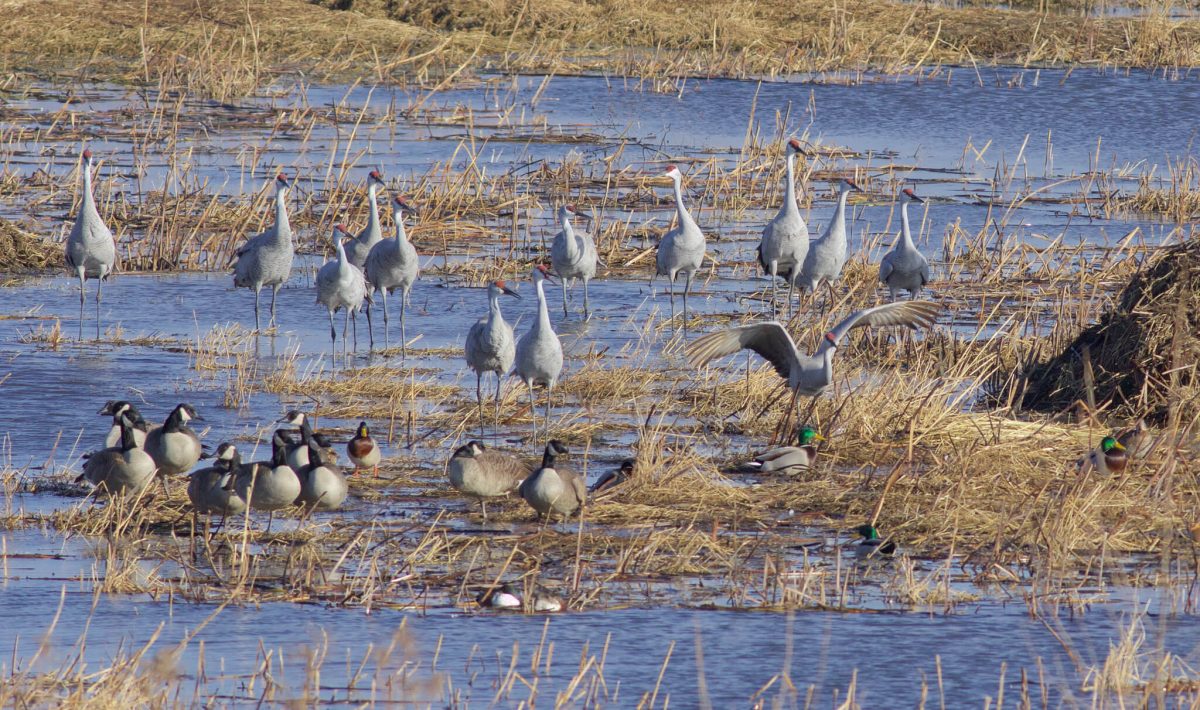
In this fable, Aesop makes a comparison of geese and cranes. In the image at the top of this page, you can see the heavier geese at the bottom, and the taller, lighter cranes at the top. For this fable, we don’t need to know much about these birds, only one key feature: the geese are heavier than the cranes and are easier for hunters to kill or capture.
III. The Moral Lesson
In the fable, we see two groups of birds doing what is natural for them: they are eating plants. Unfortunately, these are not just any plants, but special plants that are being grown by a farmer. When the farmer find them eating his young corn plants, he chases them away. It appears he may have even injured or killed some of them.
This fable can teach us many moral lessons, but I would like to focus on one: that justice is not perfect in this life. When the birds begin eating, they are simply acting out of impulse. They are not committing any crime and cannot understand why the farmer would not want them to eat his corn. The farmer comes out and finds the birds eating and chases them off. The fable suggests he may have killed or injured some of them.
The farmer is judging matters
IV. Application
Conclusion
In this lesson, we study Aesop’s fable of “The Geese and the Cranes”, in which we are warned of the danger of
